
Grand 17th-century castle


Genius Loci
From a Military Fortress to a Grand Residence
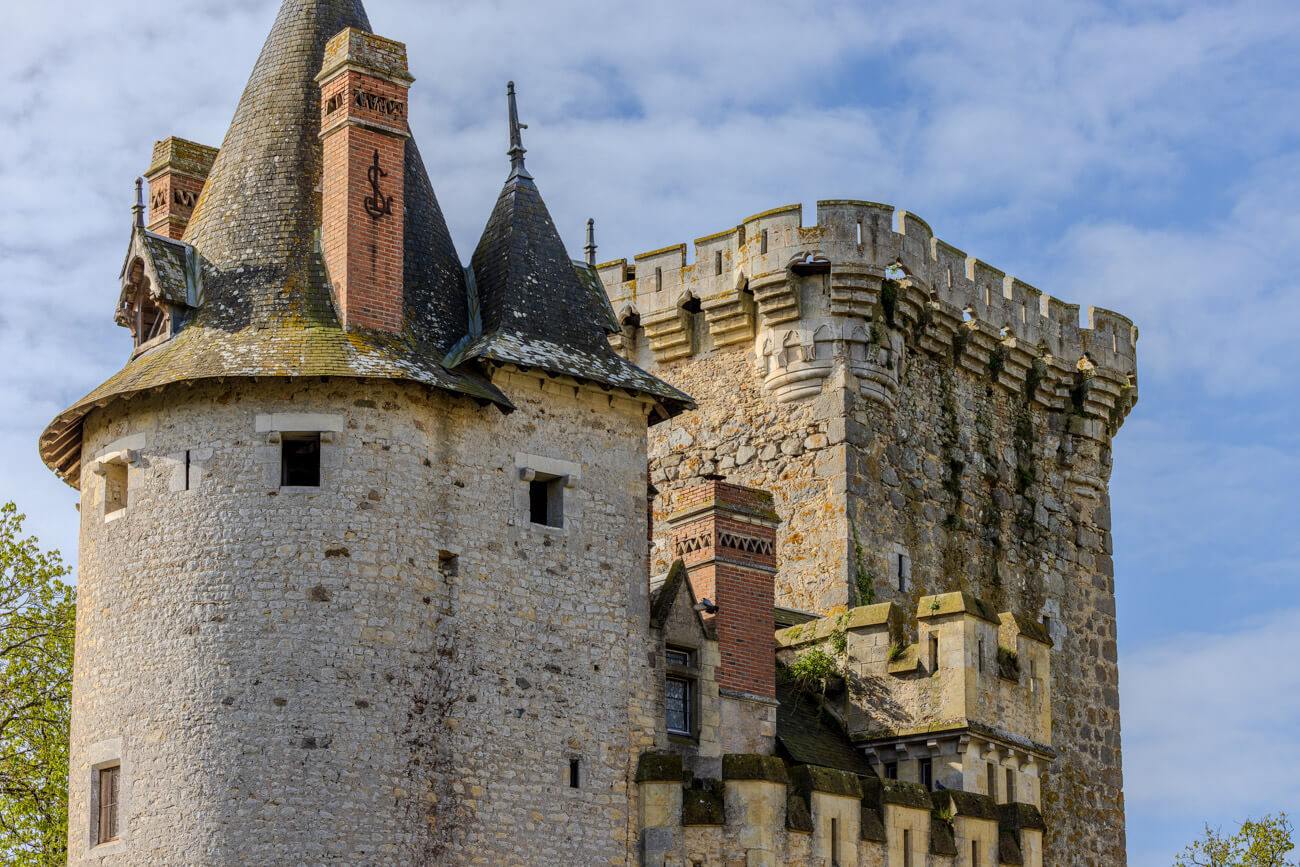
Like many châteaux, its story begins with a simple feudal motte and a handful of fortifications along a riverbank. By the 12th century, the first fortress is recorded, successively housing prisoners, at times English, at times French. When the Hundred Years’ War breaks out, a powerful keep is erected, complemented by an efficient defensive system. Water-filled moats, spur walls, ramparts, corner towers, a drawbridge… an entire arsenal designed to delay conquest. Then the war comes to an end, and the fortress is gradually abandoned. At the beginning of the 16th century, a powerful Poitou family acquires the estate. The Renaissance, along with the transformations shaping the nearby Loire Valley, passes by without leaving its mark here. The feudal stronghold falls into neglect and all the better for it. For at the very start of the 17th century, the time for transformation finally arrives. Under Henry IV, the medieval buildings are demolished, with the sole exception of the keep, preserved as the last witness to a bygone era. And there, in the aftermath of the Wars of Religion, a baroque architectural vision rises from the ground.
From Medieval Legacy to a Visionary Statement
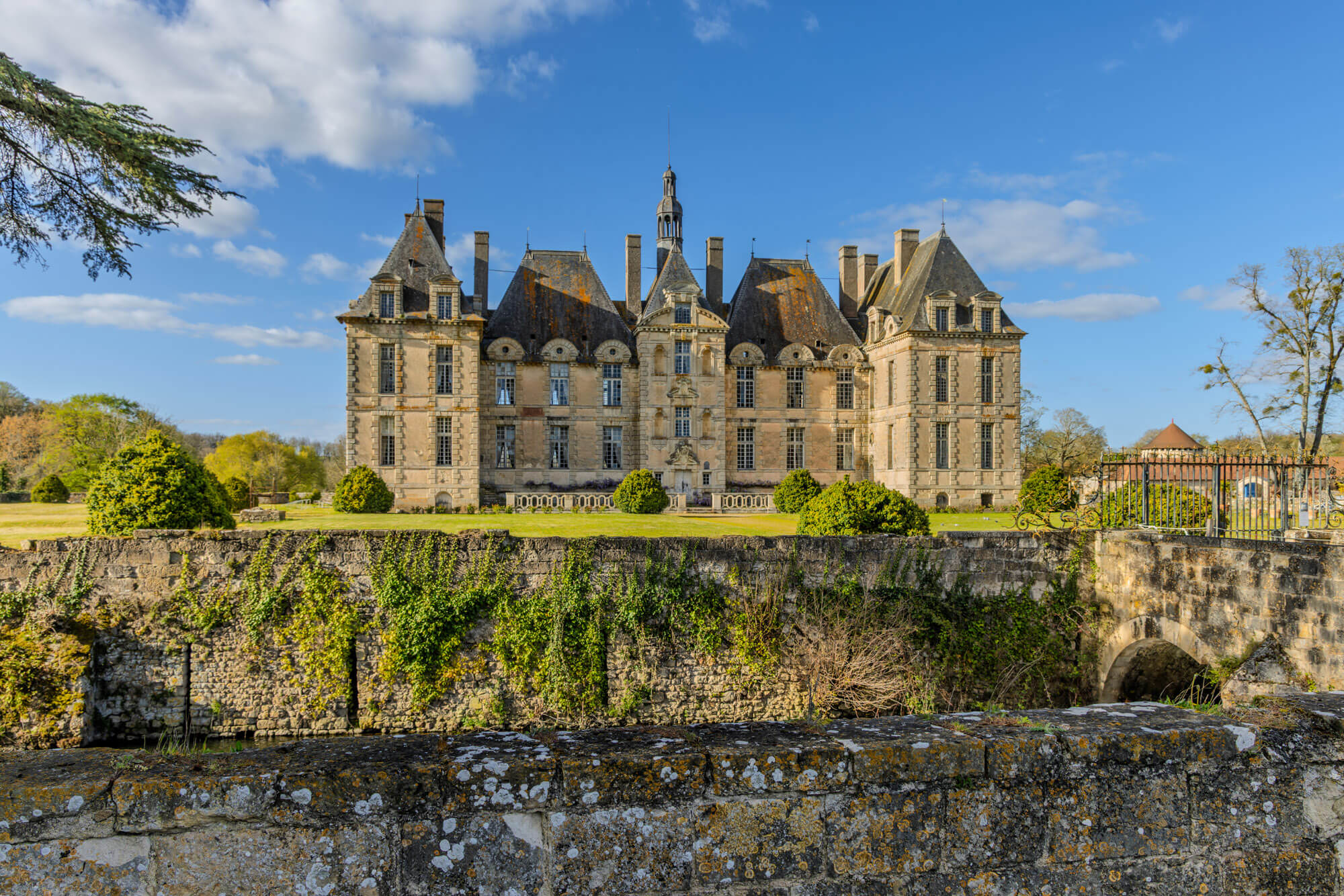
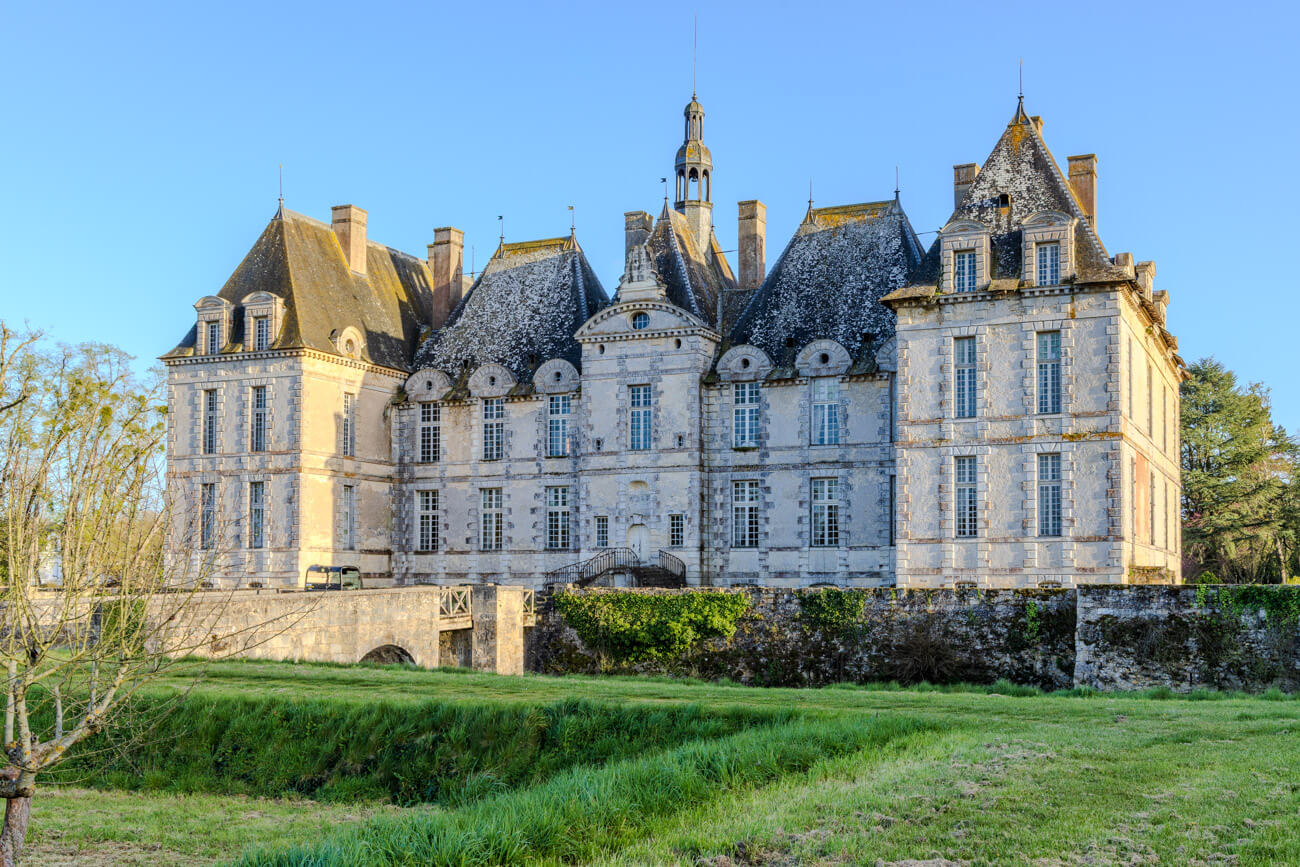
Facing the defensive architecture of the keep, though enhanced by a comfortable lordly chamber adorned with Flamboyant Gothic décor a grand “Henrician” château is constructed. By this, one understands a residence emblematic of the reign of Henry IV, whose H-shaped plan stands as a declaration of allegiance to the Protestant king turned Catholic. Beneath its air of novelty and singularity, this newly built château reveals multiple layers of meaning and bears witness to a period in profound transition. It belongs to what might be described as an “in-between” era. The château is no longer entirely a product of the late Renaissance, yet not quite a classical residence. It is, in essence, a transitional architecture, one that preserves as much as it innovates, that continues as much as it anticipates. With Renaissance undertones, a precursor emerges. Here, the Louis XIII style finds one of its earliest expressions.
A distinctive Art of Living
An Architectural Reading
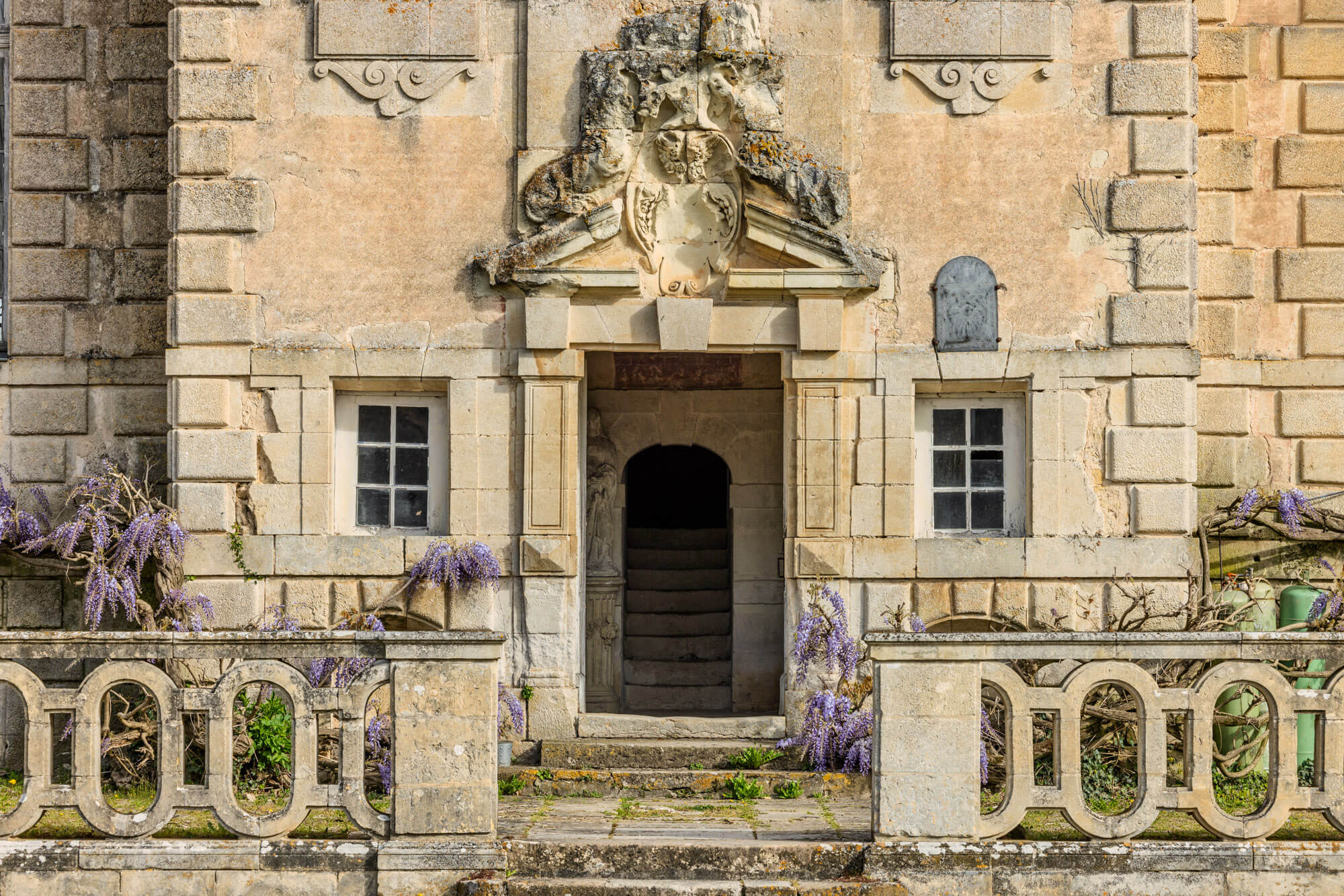
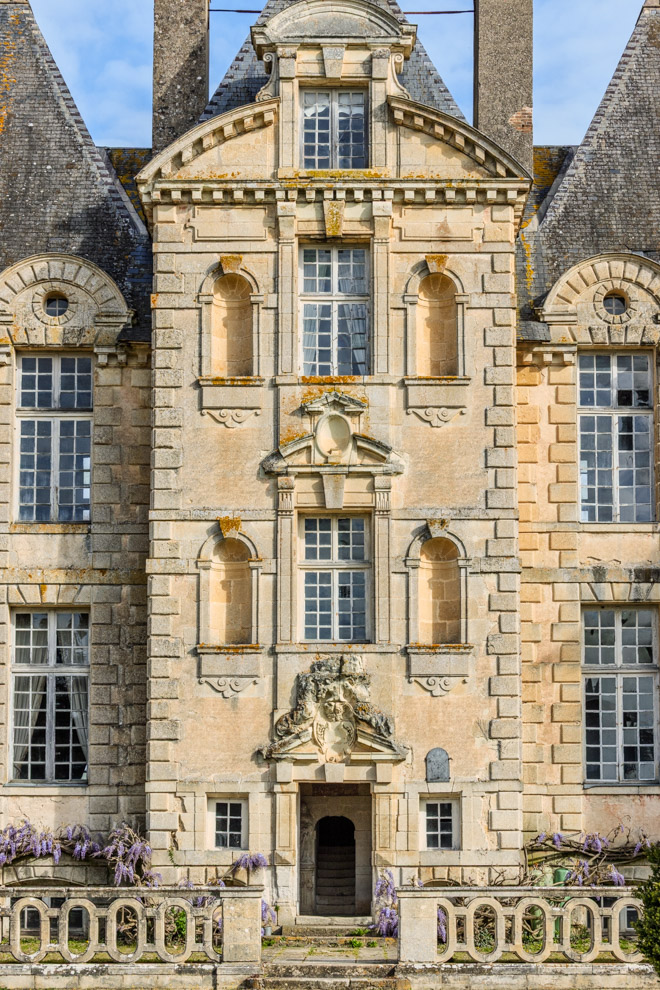
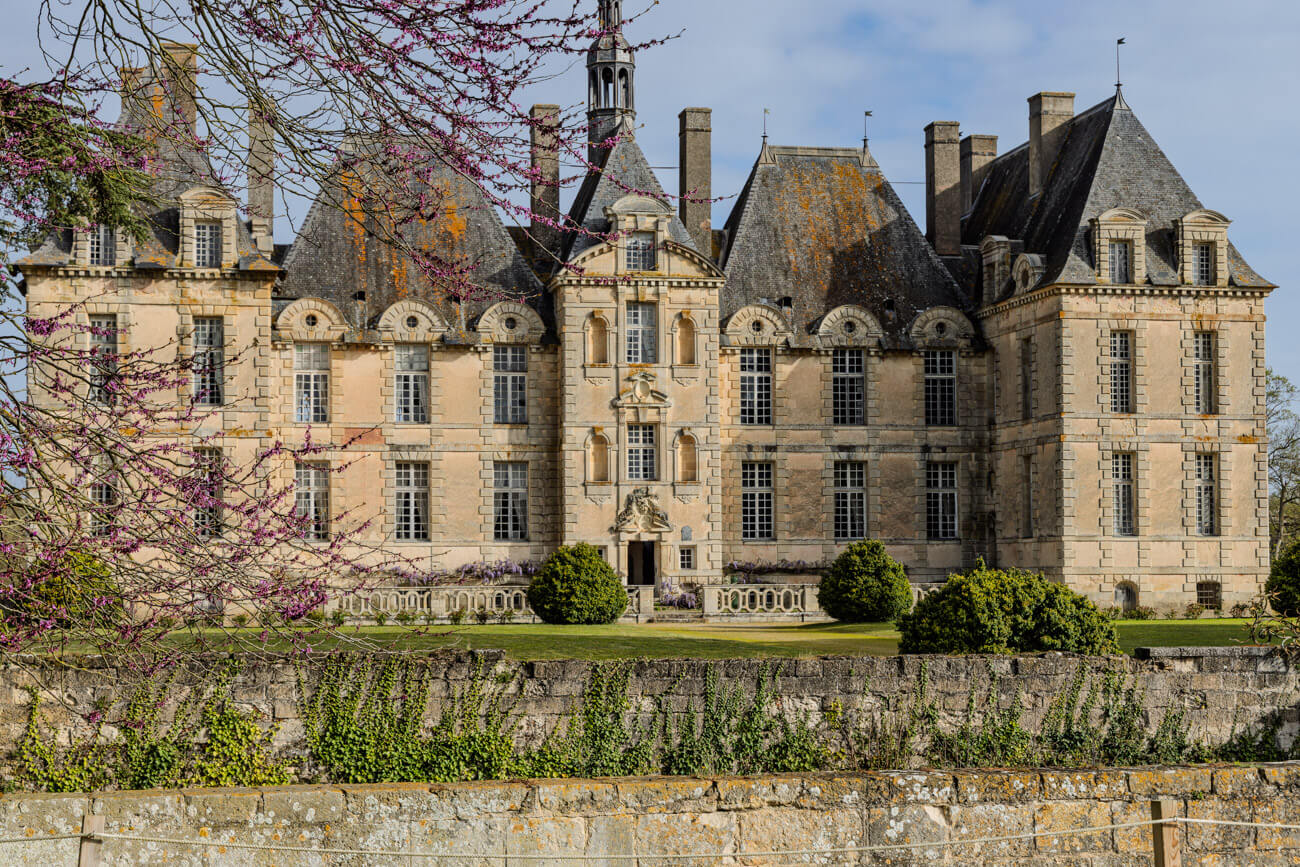
The elevations reveal the H-shaped plan. The central pavilion, on the courtyard side, features the richest ornamentation: niches intended to house classical statues, sculpted panels, strapwork, cartouches, and rusticated stonework, all still reflecting the Renaissance spirit. This pavilion contains the grand staircase and symbolizes both the earthly ascent of its patron and his spiritual elevation. In essence, it stands as a marker between temporal, earthly power and divine, eternal authority. The remainder of the façades is treated with restraint, much like the contemporary buildings lining Place Dauphine and Place des Vosges, newly constructed under the orders of Henry IV. Yet here, in true baroque fashion, illusion becomes part of the spectacle offered by the stonework. In the absence of brick, a simulated masonry pattern is painted in trompe-l’œil, echoing royal projects of the time, most notably the Château Neuf at Saint-Germain-en-Laye. Whether viewed from afar or up close, with its pavilion roofs, rusticated quoins, and broken pediments, the château, built from 1610 onward, announces, in its purest form, the architecture of the Louis XIII period.
The Art Within
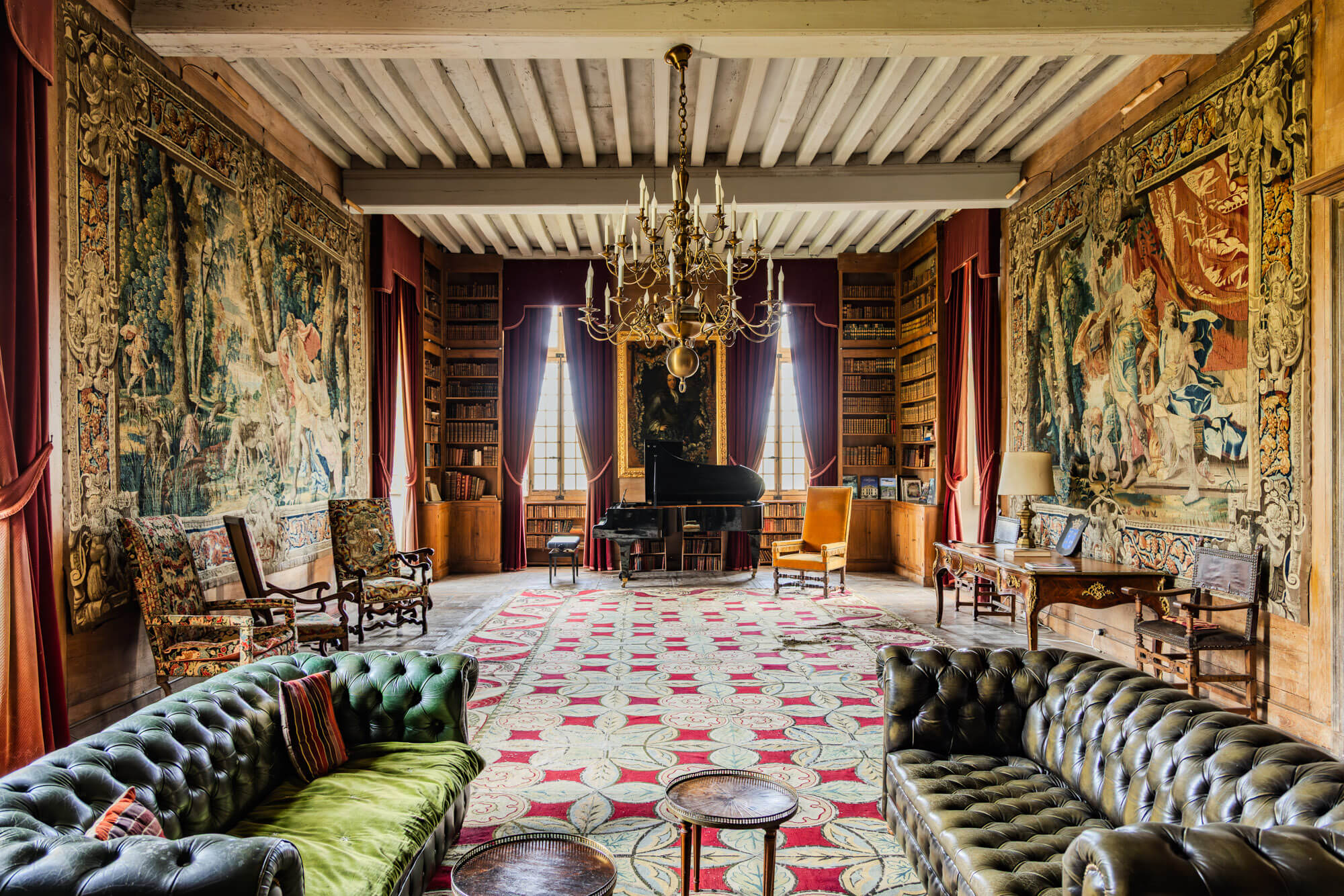
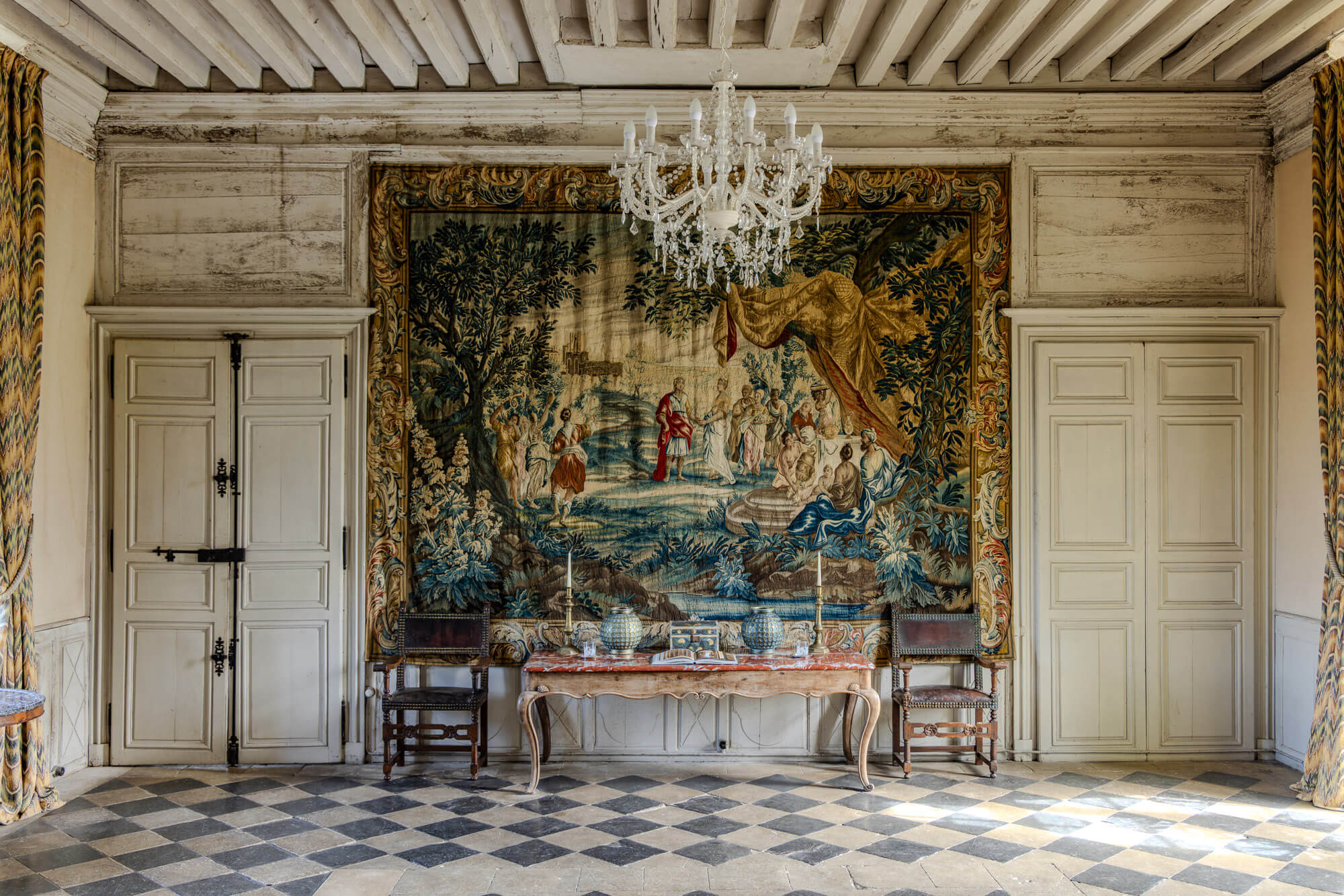
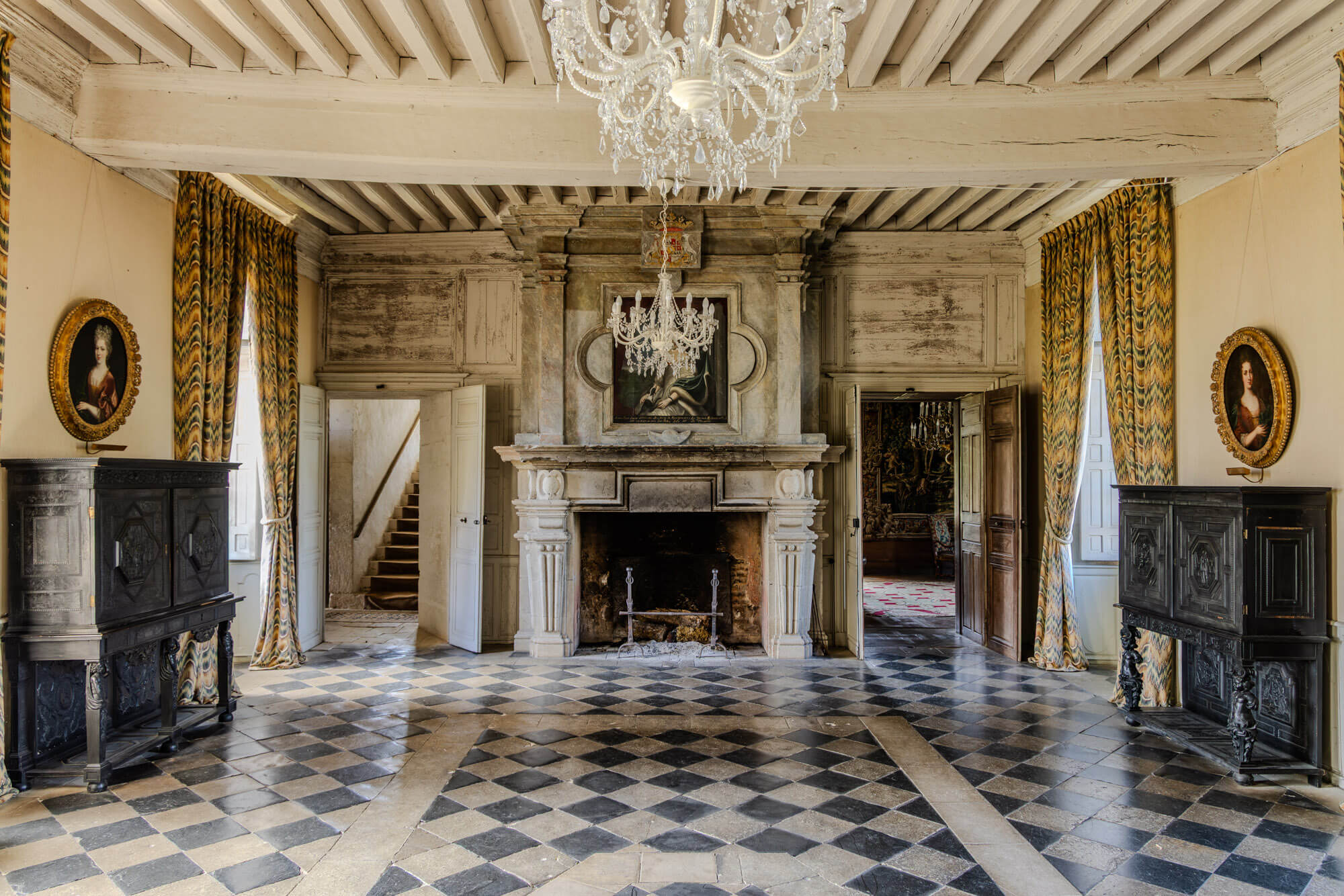
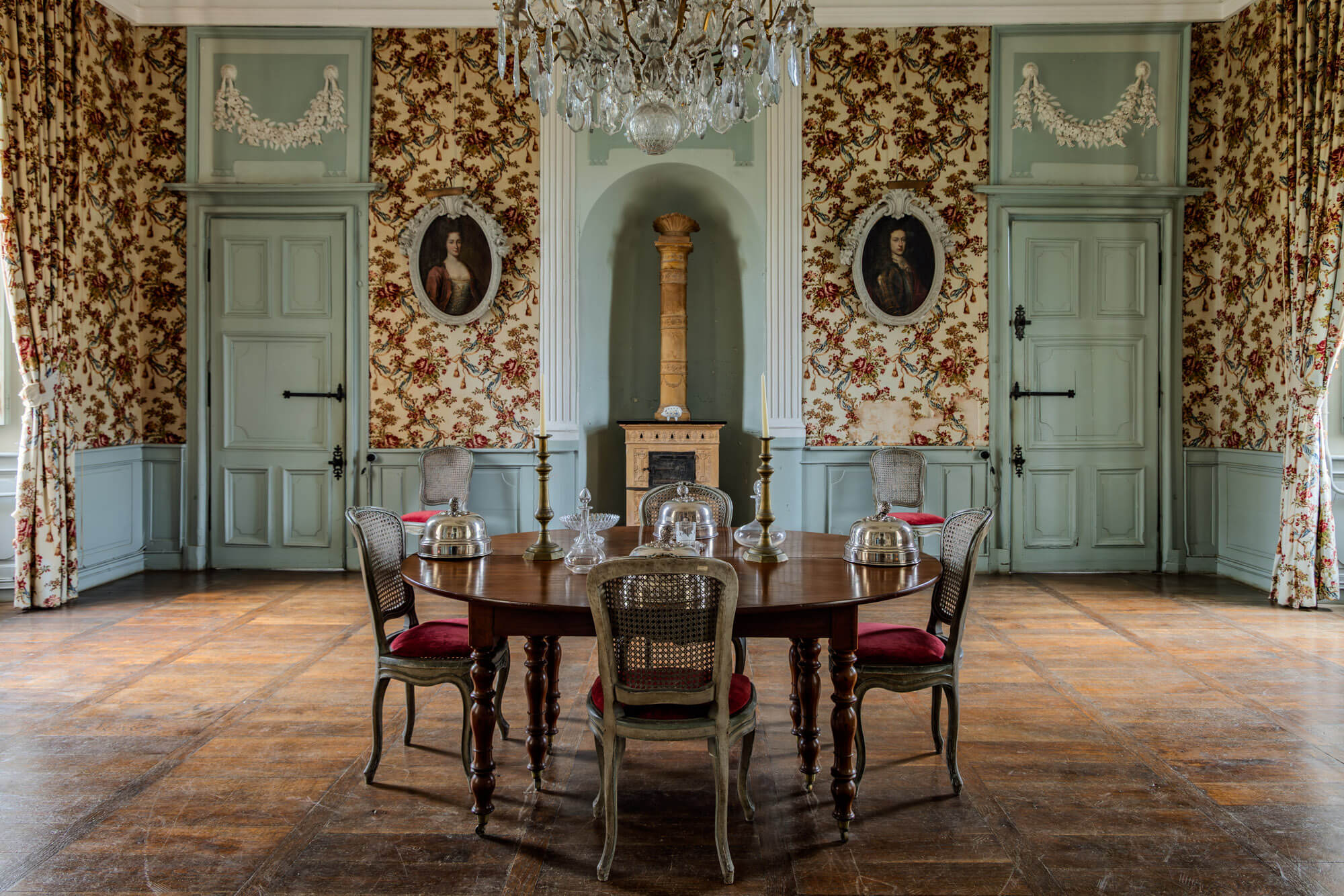
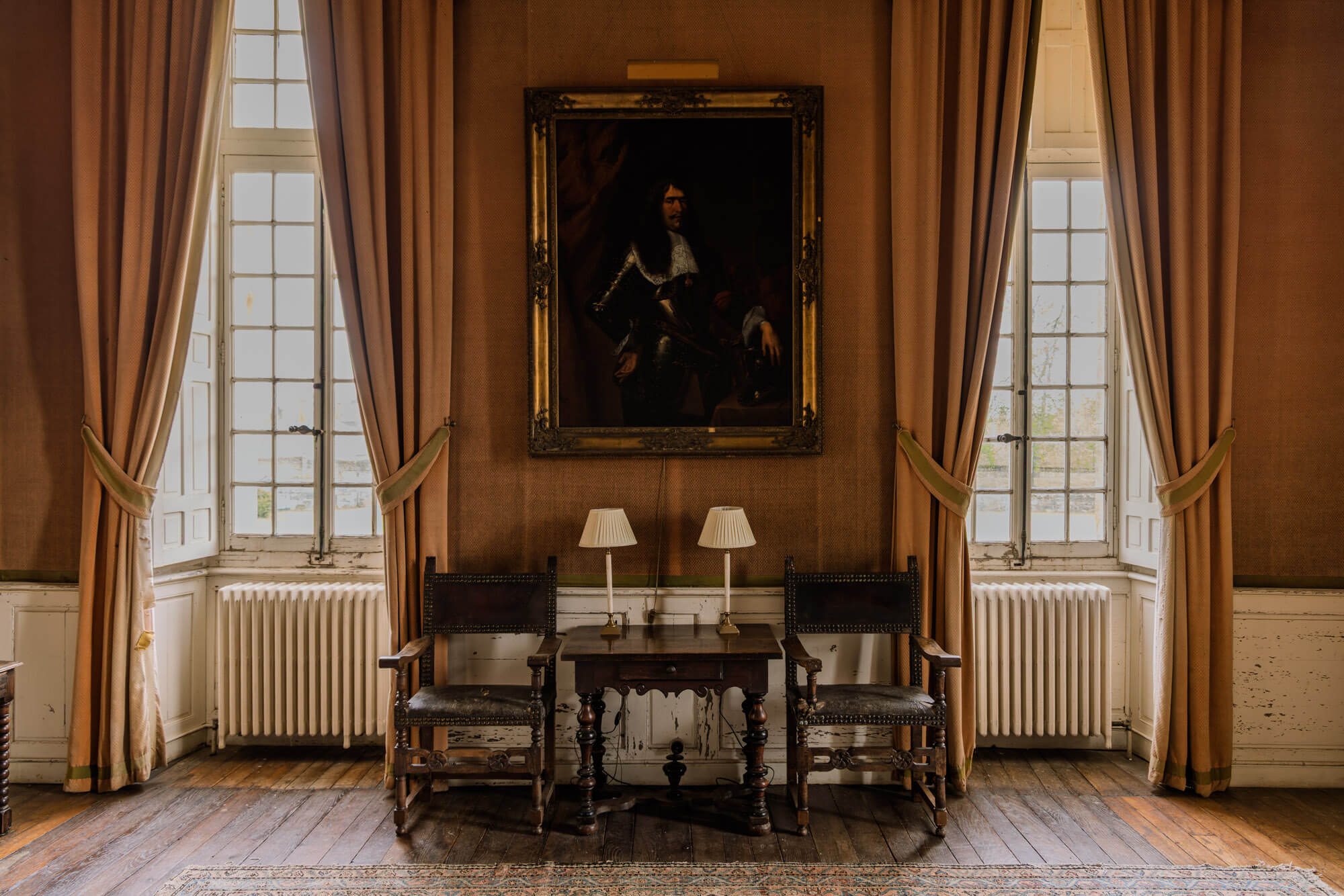
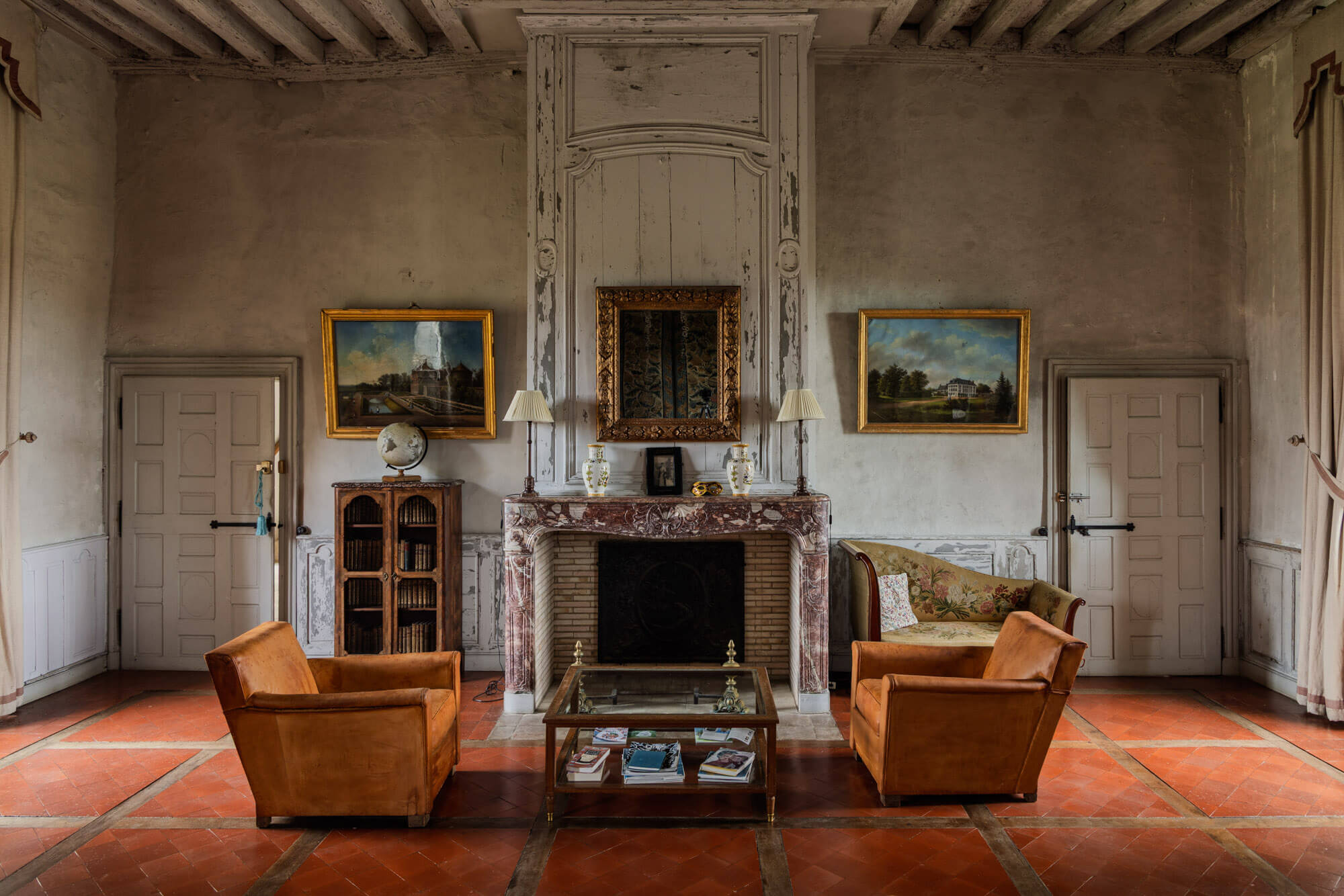
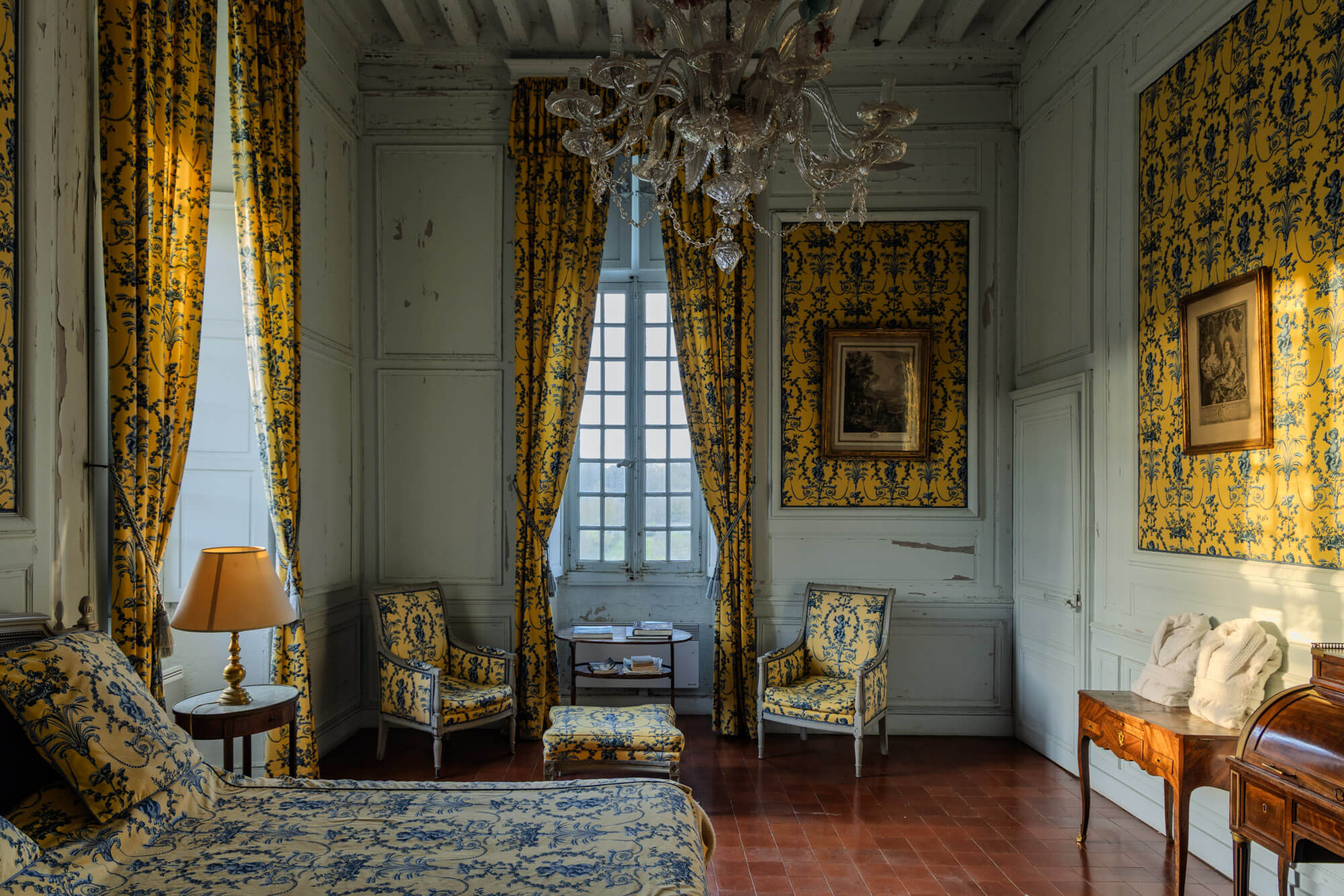
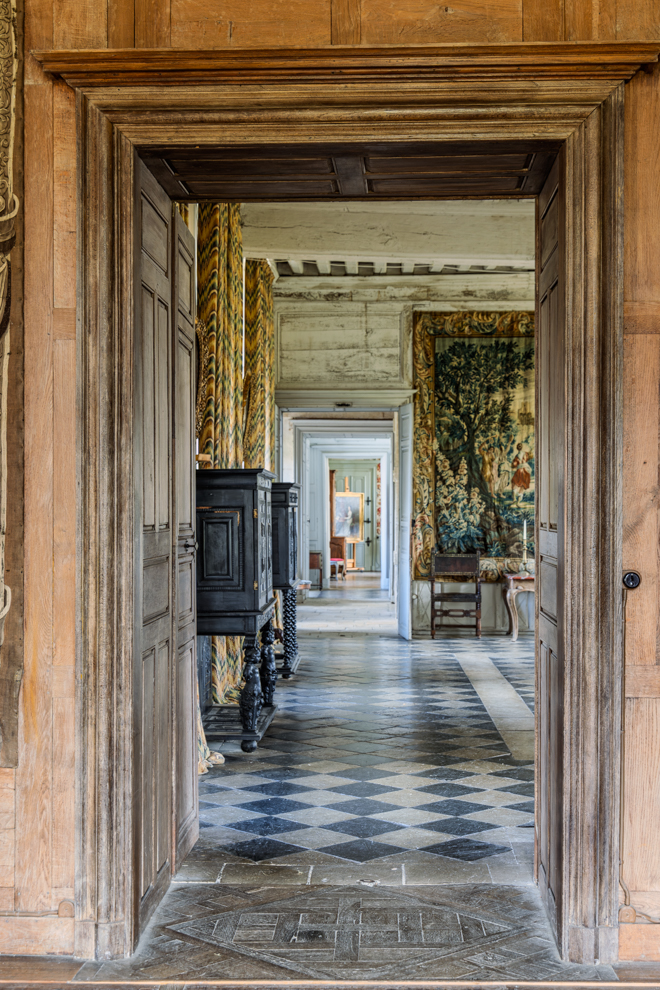
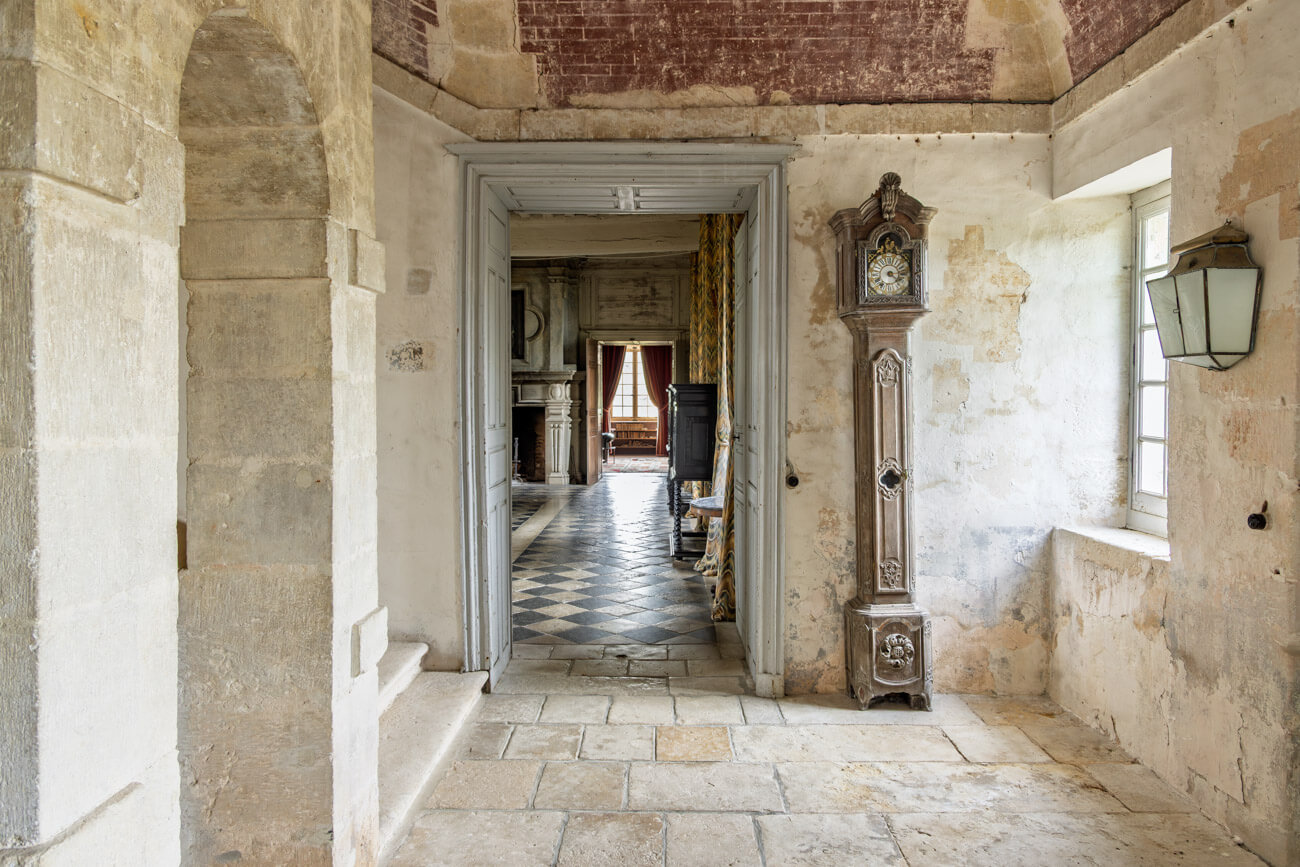
Although reconfigured during the 18th and 19th centuries, the château retains its 17th-century layout along with many elements of its original décor. In many respects, it still appears much as it did four centuries ago. Here, what is suggested on the exterior finds its full expression within. As we have seen, the staircase occupies the very heart of the building. It seems to rise endlessly, connecting every level, from the fully vaulted basement spaces once devoted to domestic service to the uppermost attic floor. The two principal floors share a rigorously identical layout: a grand hall within the main corps de logis and a private apartment in the lateral wing. The symmetry of the façades is echoed by a double interior symmetry, both horizontal and vertical. From the 17th century, the château preserves its traditional French ceilings (plafonds à la française), stone-flagged and terracotta tile floors, several monumental fireplaces, and remnants of painted decoration. From the 18th century remain marble fireplaces, parquet flooring with compartmentalized patterns, and the creation of the dining room. The library, meanwhile, was fitted out during the 19th century.
The château possesses something truly unique that has endured through the ages: a structure of remarkable balance, both simple and spectacular, designed for a noble life of reception and entertainment.
The Art of Gardens
A Preserved Estate
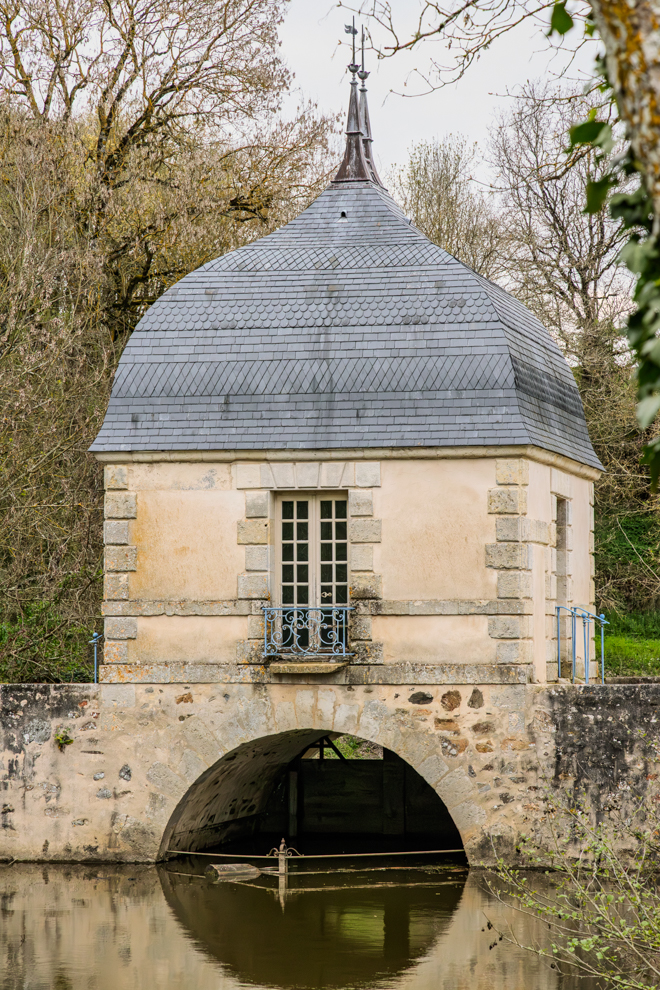
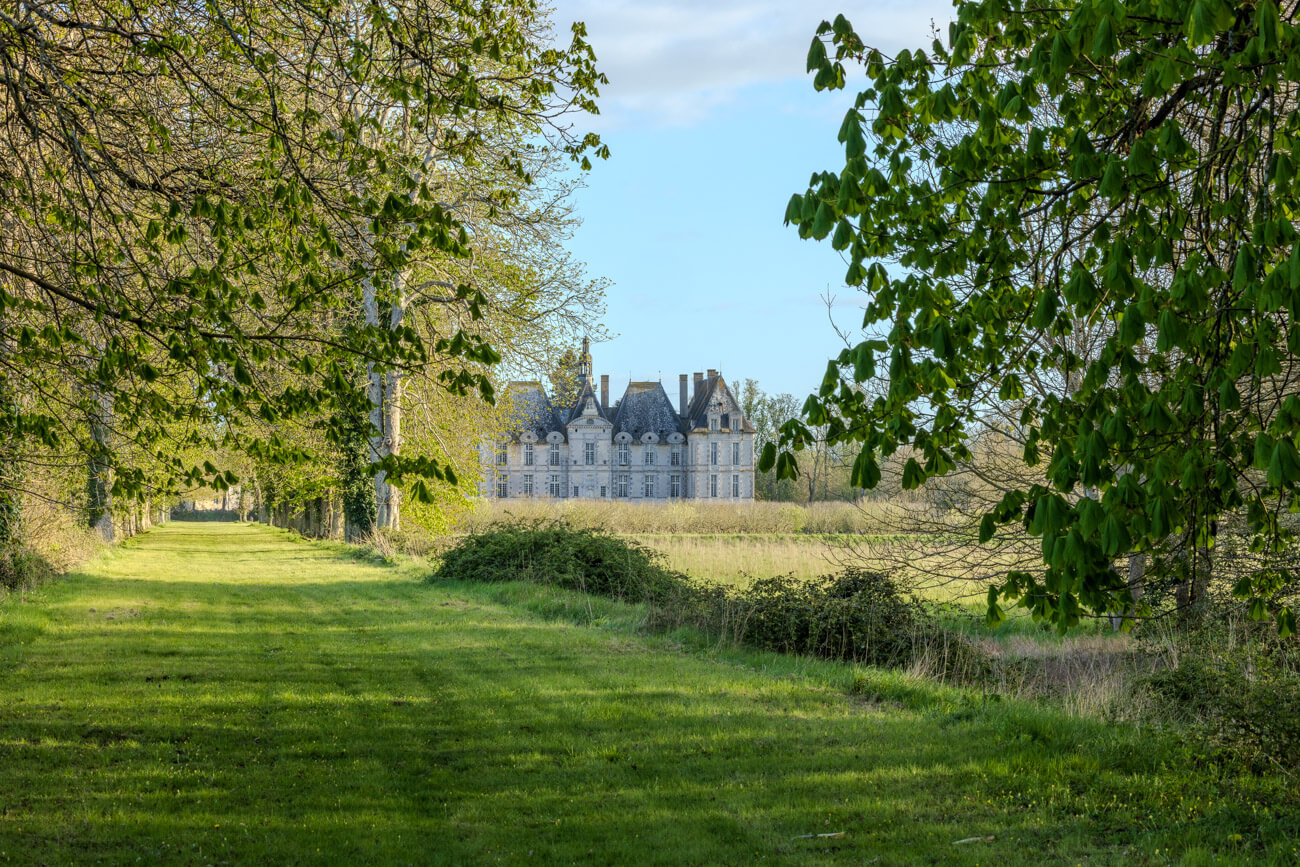
The gardens fully reflect the architectural vision of the new château. Here, no trace remains of the medieval kitchen garden, everything was redesigned at the beginning of the 17th century. Once again, the transition between two eras is evident, and here more than anywhere else, the Renaissance spirit remains palpable. The dismantled defensive system went on to structure the estate. The water-filled moats made way for the creation of a majestic canal, ending in an elegant pavilion overlooking a lock. This perspective, stretching over several hundred meters, is complemented by two long, tree-lined avenues: a grassed mall intended for the game of maillet, an ancestor of croquet, and a gravel avenue designed for leisurely strolls. Between the river and the canal lies the grand parterre, as much anticipated as it is emblematic. It is this feature that most strongly evokes the Renaissance: geometric plots, squares of greenery, arranged in an ordered yet not strictly axial composition with the architecture. The current kitchen garden was created in the 18th century, its layout faithfully reproduced some thirty years ago. Closer to the château, the parterres within the medieval footprint, upon which the château now stands, were not laid out until the final disappearance of the last ancillary courtyard buildings, at the very end of the 19th century. The estate also includes an orchard and a small woodland laid out in a patte d’oie (goose-foot) formation.
The Outbuildings
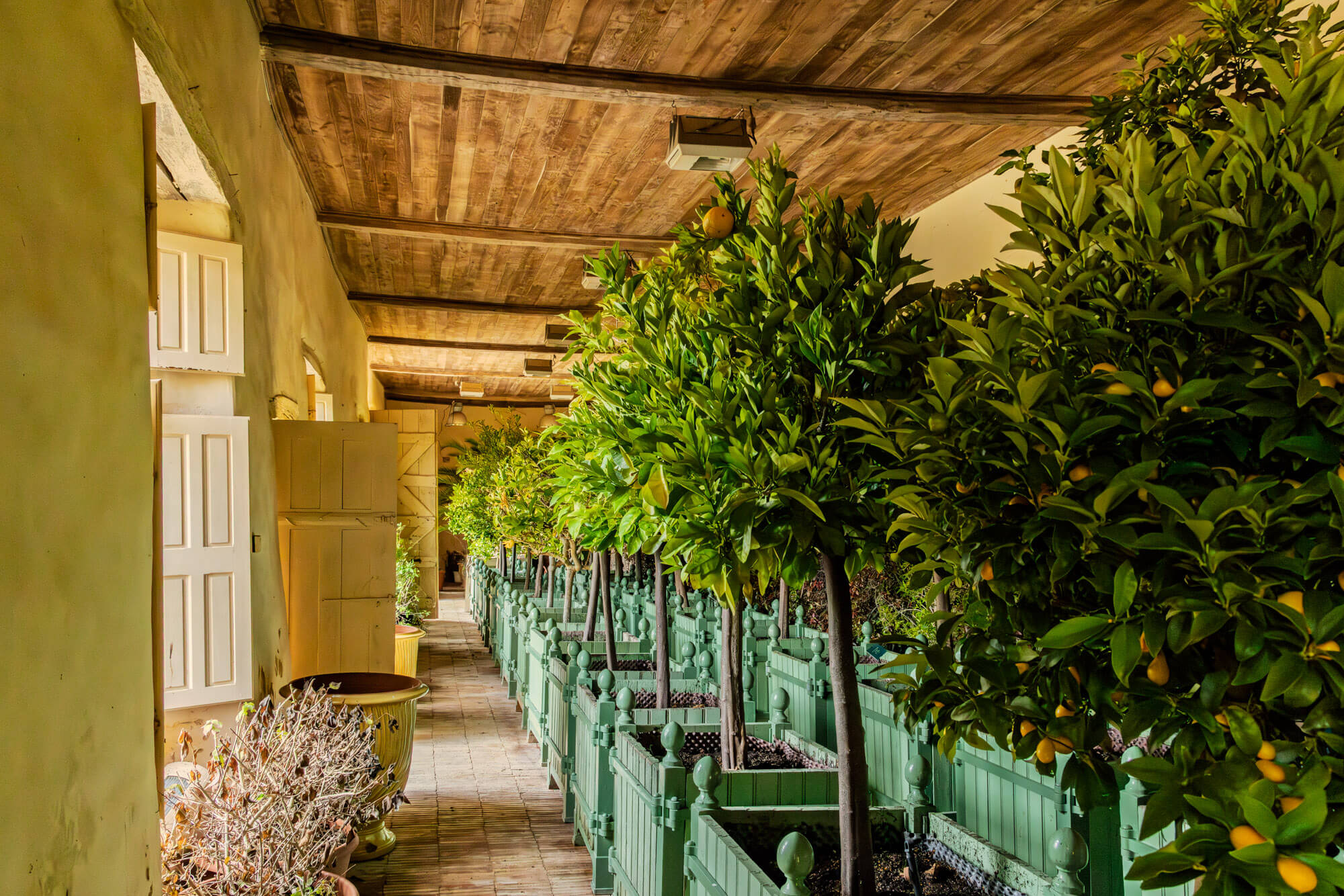
Just as the vaulted basement houses the domestic quarters essential to life within the château, the outbuildings ensure the upkeep of the gardens. Among them, the orangery is an essential feature, widely introduced in France following the Italian Wars. Here, the orangery is most likely contemporary with the construction of the château. Measuring 50 meters in length, it houses several dozen plant species and is used during the warmer months for receptions. The estate also includes a farmyard around which the menagerie and stables are arranged. Finally, a dovecote completes the ensemble. Measuring 13 meters in diameter, it once contained nearly 2,000 nesting boxes (boulins), and thus as many pigeons.
Essentials
• Department: Deux-Sèvres
• Periods of Construction: 12th, 15th, 17th, 18th and 19th centuries
• Living Area in the Château (excluding basement and unconverted attic space): approx. 1,000 sqm
• Land Area: approx. 41 hectares
• Château – Main Rooms: 20, including 9 bedrooms
• Keep – Main Rooms: 12, including 10 bedrooms
• Outbuildings: Orangery / Stables / Former Menagerie
• General Condition: Partially restored / Further works required
• Designation: Listed Historic Monument
• Nearby: Village with essential amenities
• Energy Rating (DPE): Not applicable
• Asking price: €9,569,378
• Agency Fees: €430,622 payable by the buyer
• Price Including Agency Fees: €10,000,000
Note on Historic Listing:
The château benefits from a partial listing as a Historic Monument, ensuring official recognition of its heritage value. This status provides access to significant tax advantages in the event of restoration works, as well as specific grants, subject to project approval. It also stands as a guarantee of preservation, transmission, and high standards, in service of a living heritage.
Presentation dossier available upon request
Restoration budget to be anticipated Information regarding the risks to which this property is exposed is available on the Géorisques website: https://www.georisques.gouv.fr/
L&T’s insight

There are residences that do more than simply impress: they embody, in their very fabric, the spirit of their time. And I see three reasons for this:
• An architecture that retains only the essence of everything that came before
• A work that stands at the forefront of styles yet to emerge
• A residence that has endured through the centuries
On this last point, it is not merely a matter of having avoided demolition, but of preserving a significant number of authentic elements, allowing for a true and in-depth reading of the place. Understanding and truly inhabiting such a property depends on this. Here, everything speaks, and everything matters, from medieval remains to the final gestures of the late 19th century, passing of course through the baroque, that art of illusion and concealment, as well as the refined additions of the 18th century and the modernizations carried out in the 20th and 21st centuries. What strikes me most here is the ingenuity with which baroque art is expressed.
The château is not merely a residence to be occupied; it is an entire world to be inhabited. In this art of staging, the château is not simply a box from which one observes the spectacle, it is at once the stage and the leading character in a play unfolding everywhere.