
18th-Century Hunting Pavilion – Neoclassical Décor

Genius Loci
A Residence Shaped by History…
At the heart of a wooded landscape once shaped by religious orders and seigneurial powers, this estate is rooted in a layered and enduring memory. One senses the former presence of a feudal motte, gradually replaced by a fortified dwelling and later transformed, in the classical era, into a château of leisure and refinement. The present architectural composition took form during the 17th and 18th centuries. It emerged from an ambitious reconstruction, embodying the transition from a feudal world to a more ordered and serene art of living. Preserved within the same lineage for over a century, the residence weathered the upheavals of history without ever losing its soul. Today, it stands as testimony to a rare continuity: that of a place able to evolve, to fall silent when necessary, and to be reborn when time required it.
Measured Architecture, Between Nobility and Restraint
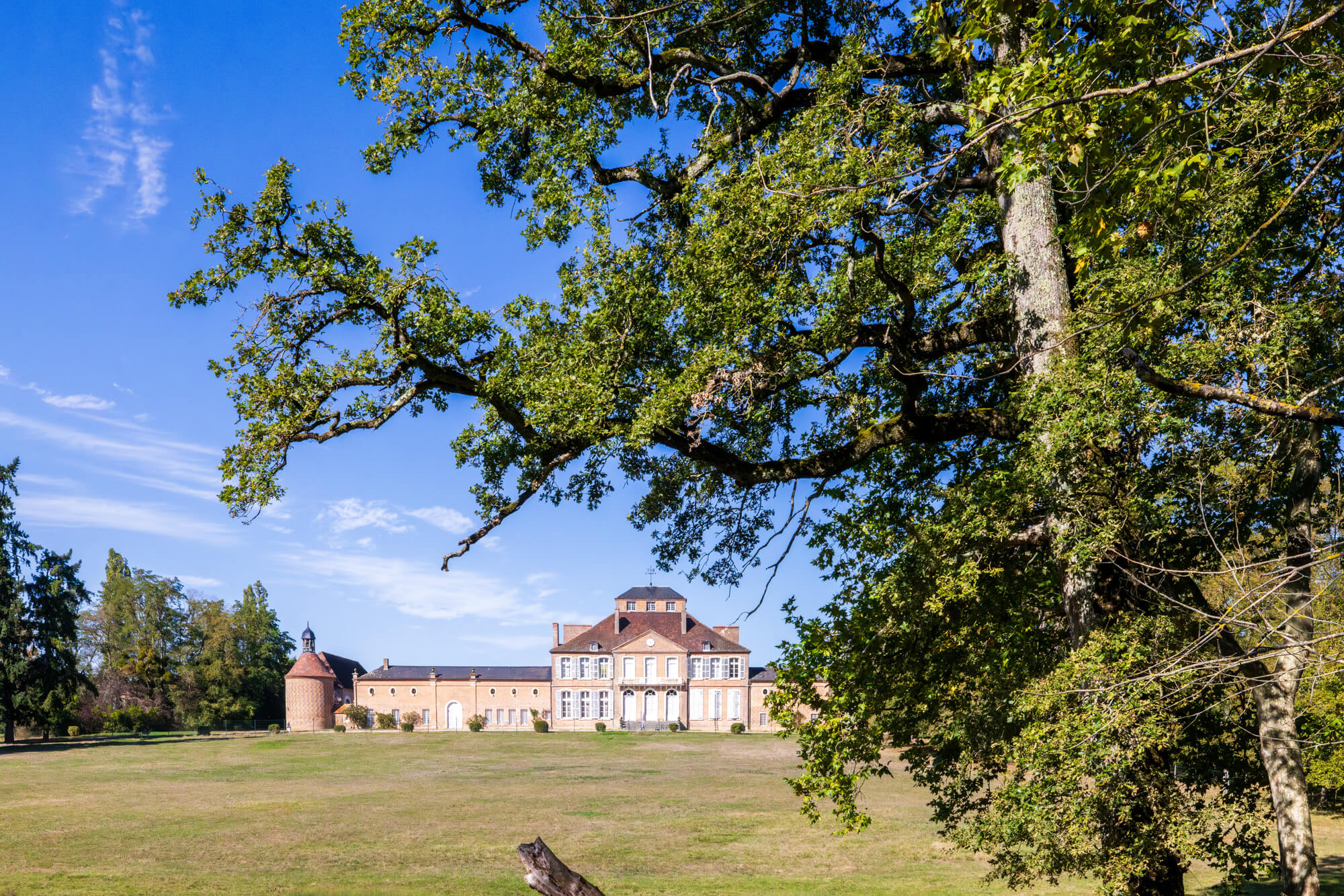
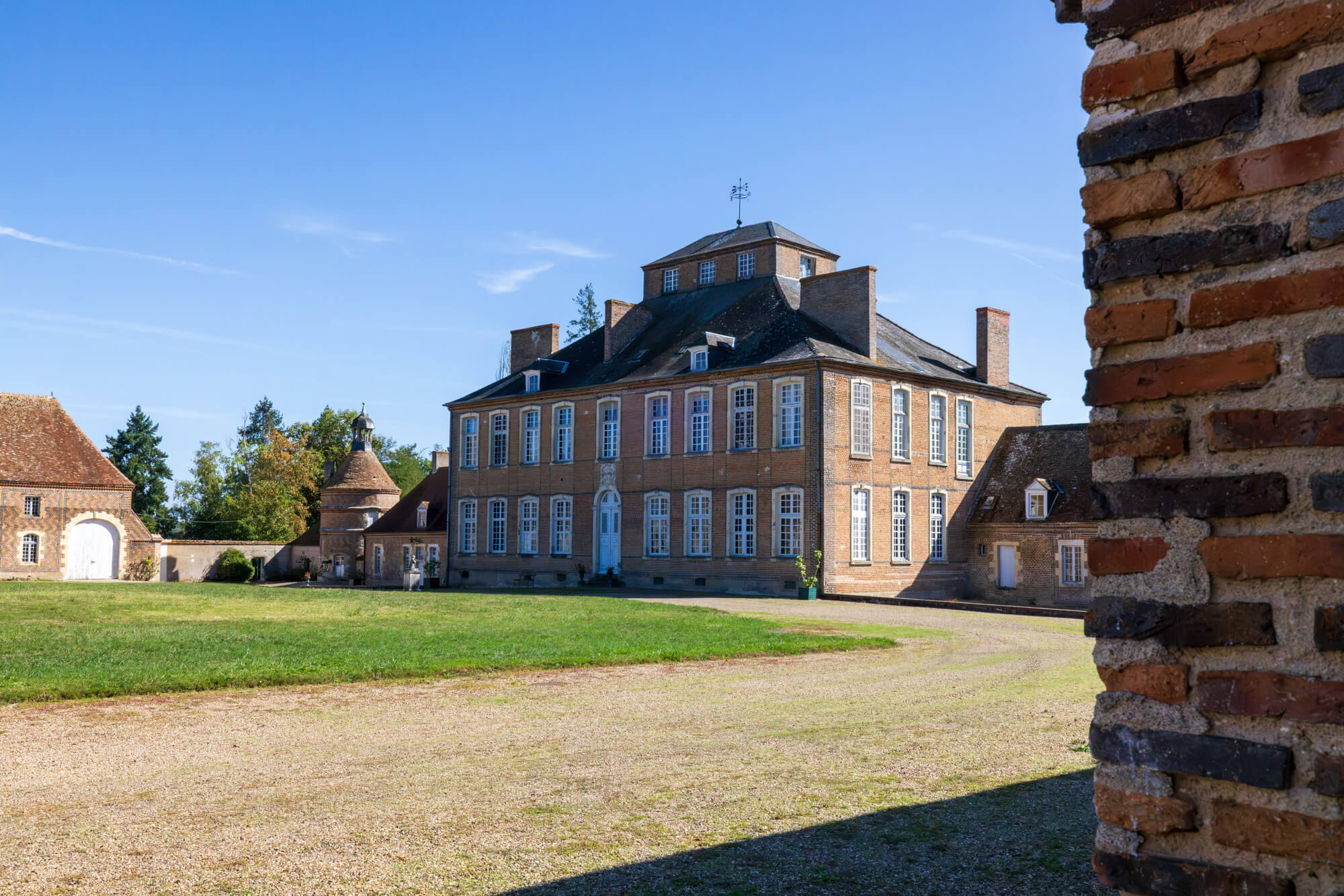
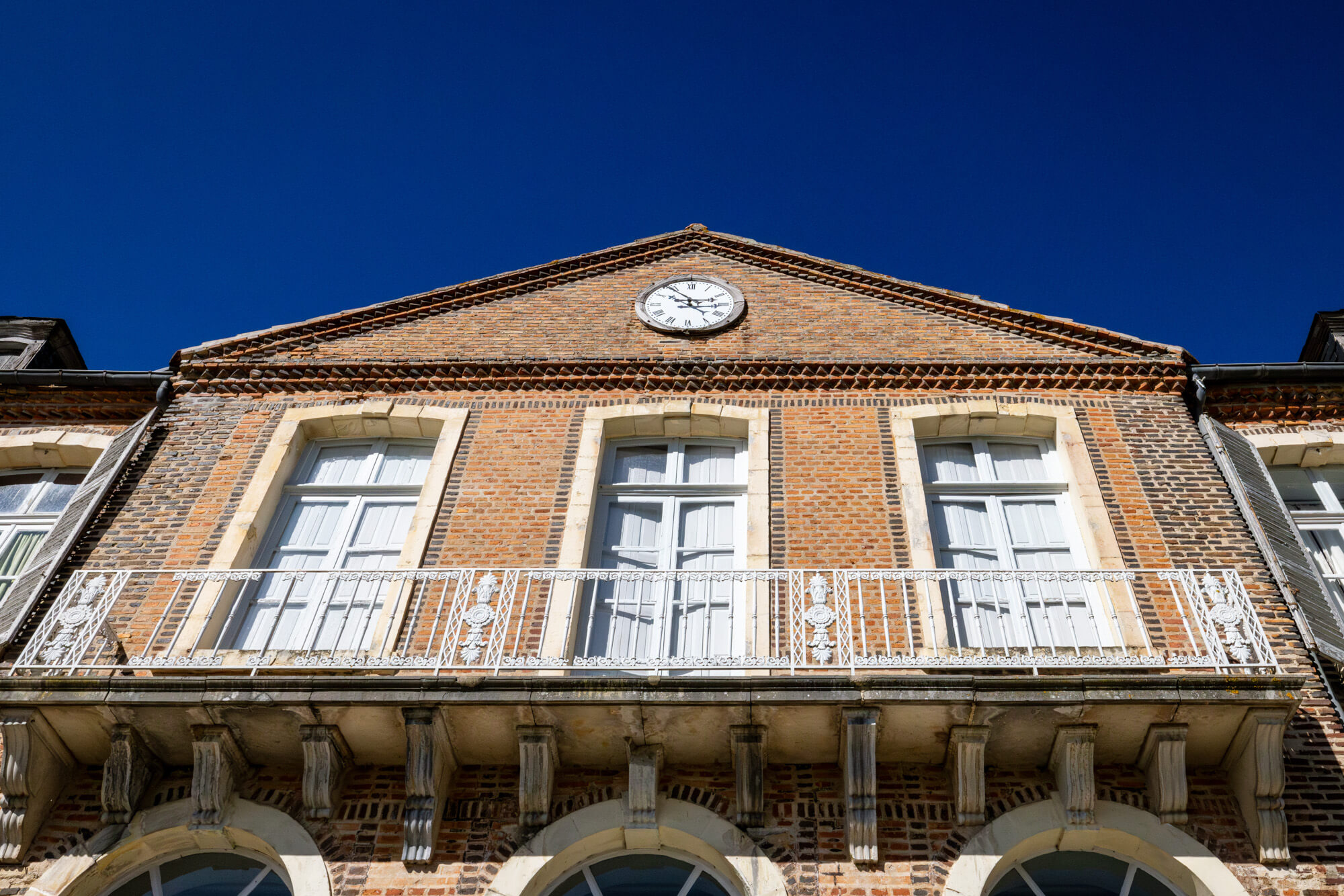
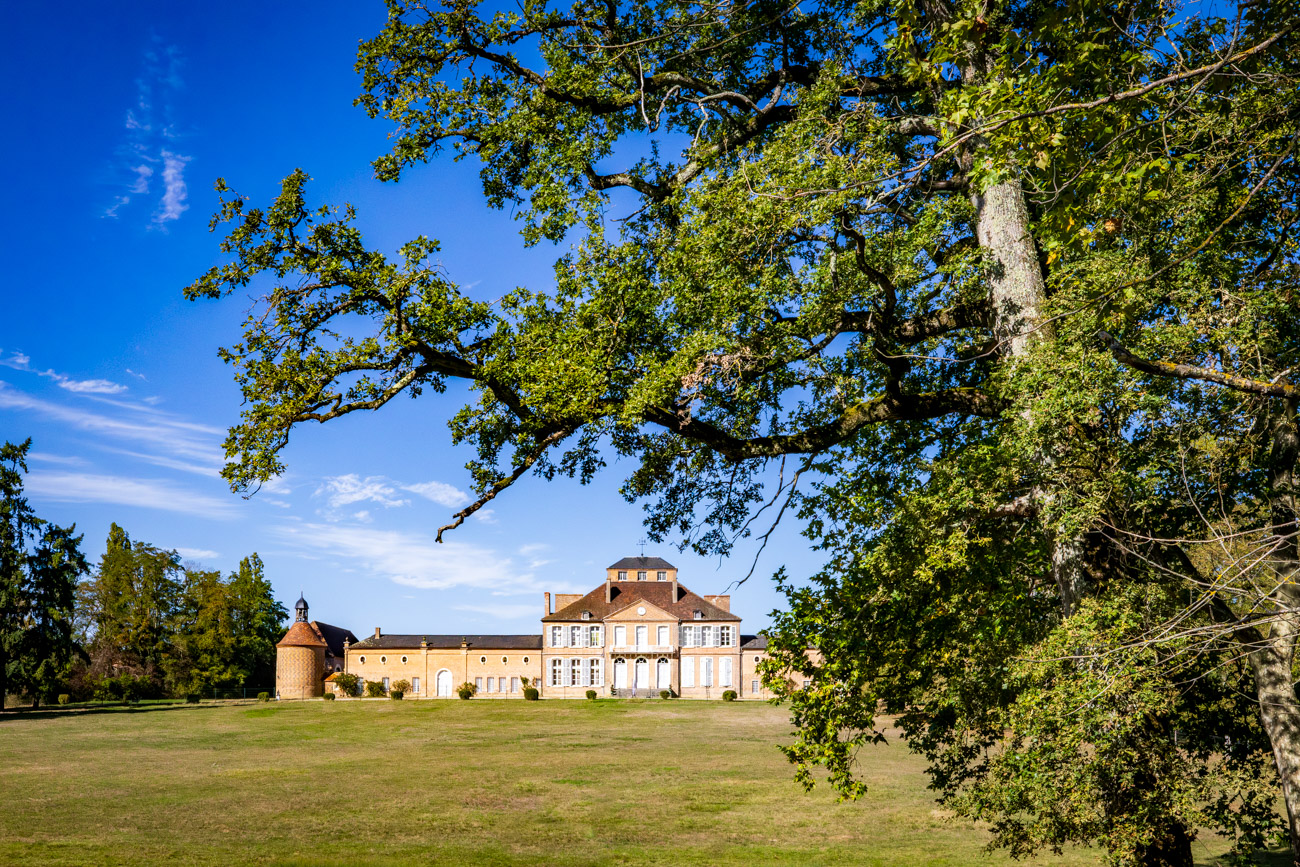
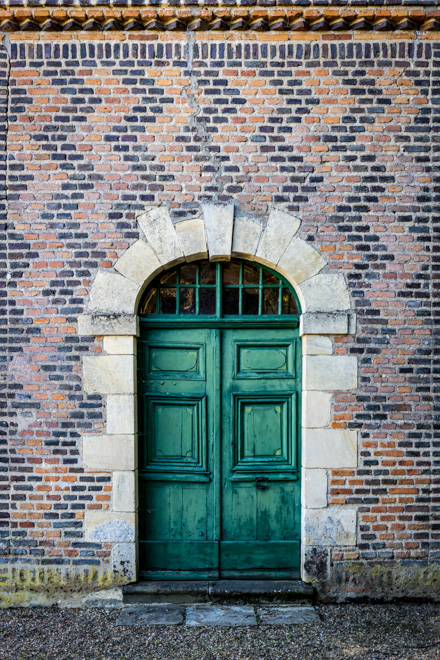
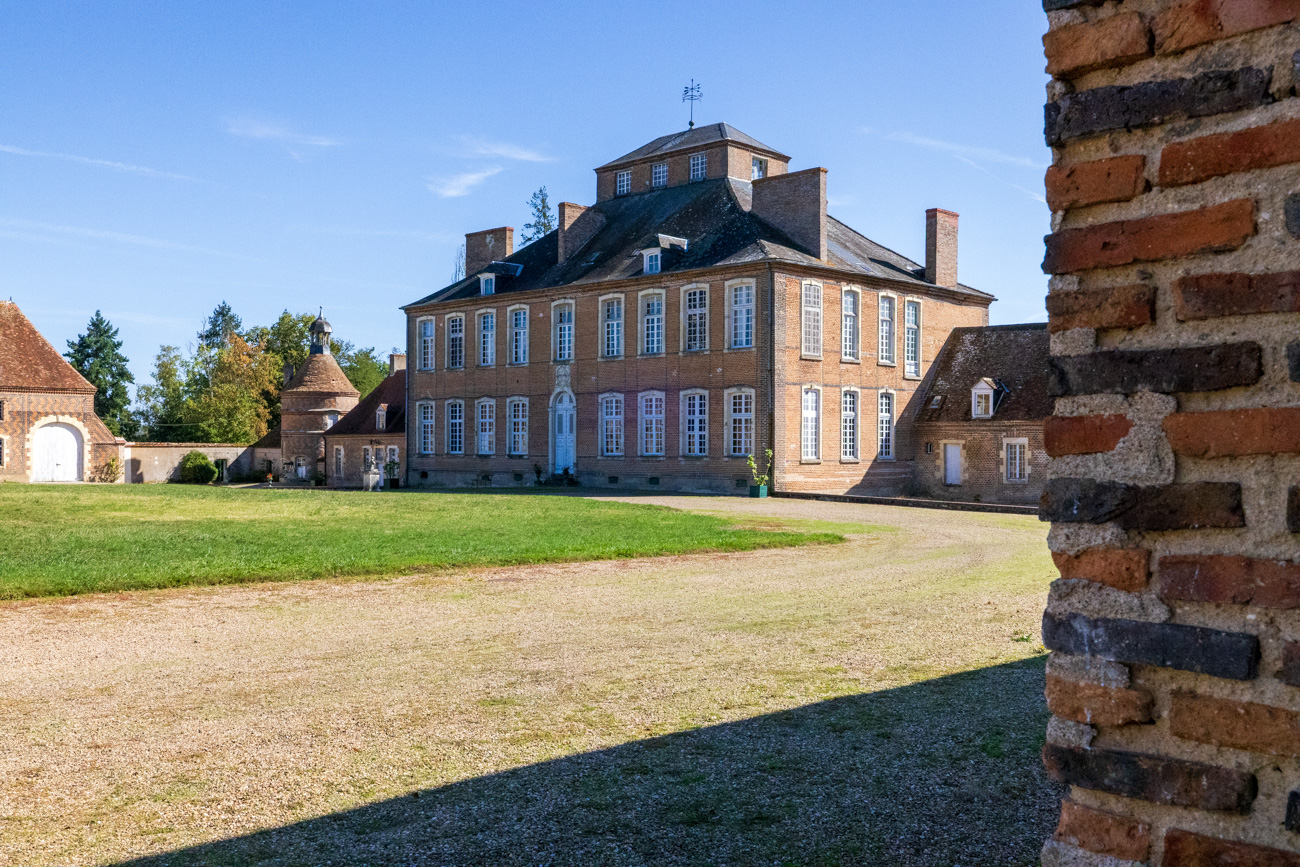
The 18th century was an age of measure. In contrast to Baroque display or Versailles pomp, certain aristocratic residences embraced contained elegance. Such is the case with this hunting pavilion: a seigneurial retreat conceived for hosting, contemplating, and existing in harmony with the landscape. The composition is deliberately sober: a central block of rigorous proportions, flanked by two lower wings. The whole rests upon a symmetrical framework, free of emphasis, where the verticality of the belvedere responds to the tranquil horizontality of the façade. Here, harmony prevails over grandeur. The building blends the vocabulary of French Classicism (compact plan, formal forecourt) with Anglo-Saxon or Rhenish influences, perceptible in the materials (polychrome brickwork), the circular towers, and perhaps in the elongated structure of the wings. Nothing proclaims itself. Everything is precise. This is the essence of an architecture of restraint—conceived to serve a noble purpose without ever seeking ostentation. A French art of silence, inherited from the Enlightenment, where rigour itself becomes refinement.
A distinctive Art of Living
The Architectural Sequence
The elevations reveal a compact plan, characteristic of the pleasure residences erected by the French aristocracy at the dawn of the 18th century. The entrance vestibule, placed at the centre of the noble section, aligns with the grand reception salon and houses a monumental staircase, immediately asserting the symmetry and hierarchy of spaces. The grand salon, the true heart of representational life, opens onto the park through three tall mullioned windows. It is flanked on one side by the dining room and on the other by a more intimate drawing room. Beyond, a sequence of smaller spaces, boudoirs, antechambers, studies, service rooms, forms a functional and elegant progression, conceived as much for comfort as for ceremony. The upper floor follows the same rigorous framework. The former state apartments, typical of aristocratic residences, have been reorganised to accommodate several spacious bedrooms. Three of them, overlooking the park, retain a noble character, while the rooms facing the forecourt reveal a more domestic sobriety. The lateral wings complete the composition: a vast kitchen, storage rooms, a connecting gallery, secondary bedrooms. Thus unfolds a château conceived as a coherent whole, balancing the demands of service, the splendour of representation, and the comfort of a refined art of living.
The Art Within
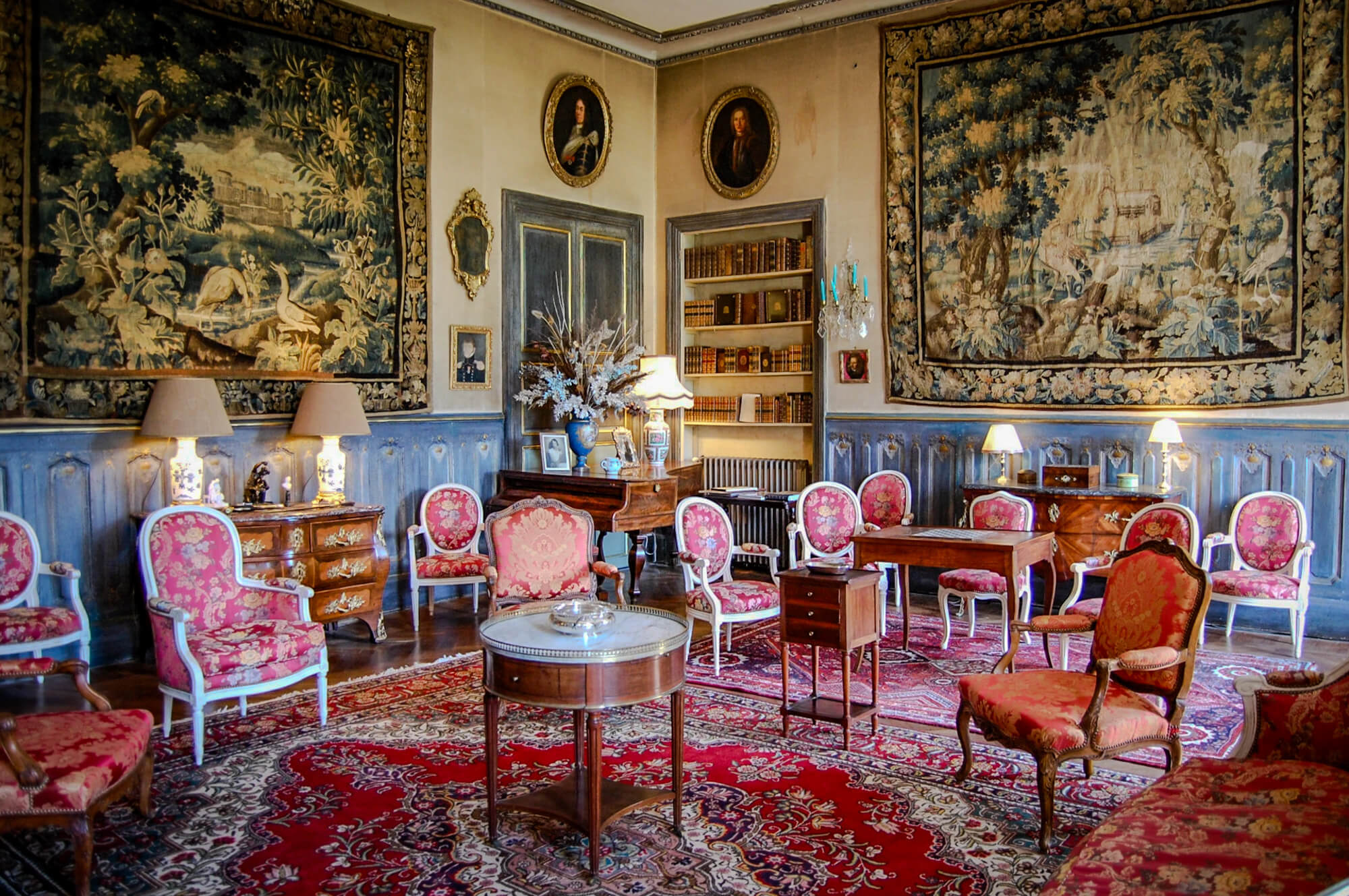
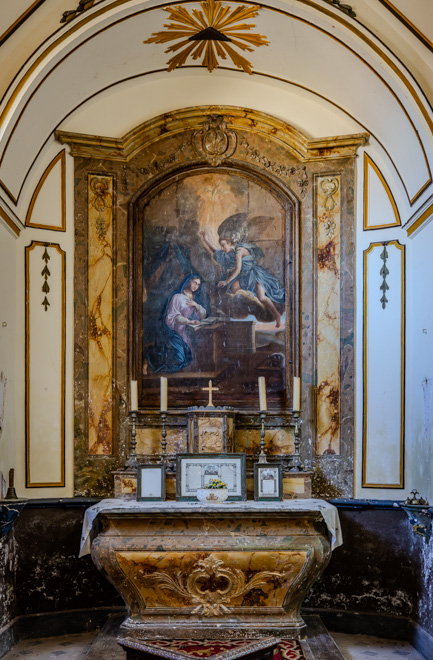
Within, elegance continues. The decorative schemes inherited from the 18th century still exude the spirit of Enlightenment France. Revolutions and wars have not unsettled the taste of the Ancien Régime. Rocaille motifs unfold with grace and lightness. The chapel, the drawing room, and several bedrooms are adorned with shells and floral garlands, expressing a supple and refined ornamentation. The volumes are generous yet never austere, bathed in light filtered through tall windows. Panelling, stuccowork and delicate mouldings compose a décor of subtle nuance, where the artisan’s hand yields to the intelligence of line and proportion. Nothing is ostentatious: here, elegance does not impose itself, it accompanies. Each room seems to await conversation, softened footsteps, the rustle of a gown, or the quiet presence of a reader. An art of interiors that is not merely decorative, but deeply inhabited.
A Neoclassical Décor, Subtly Magnified
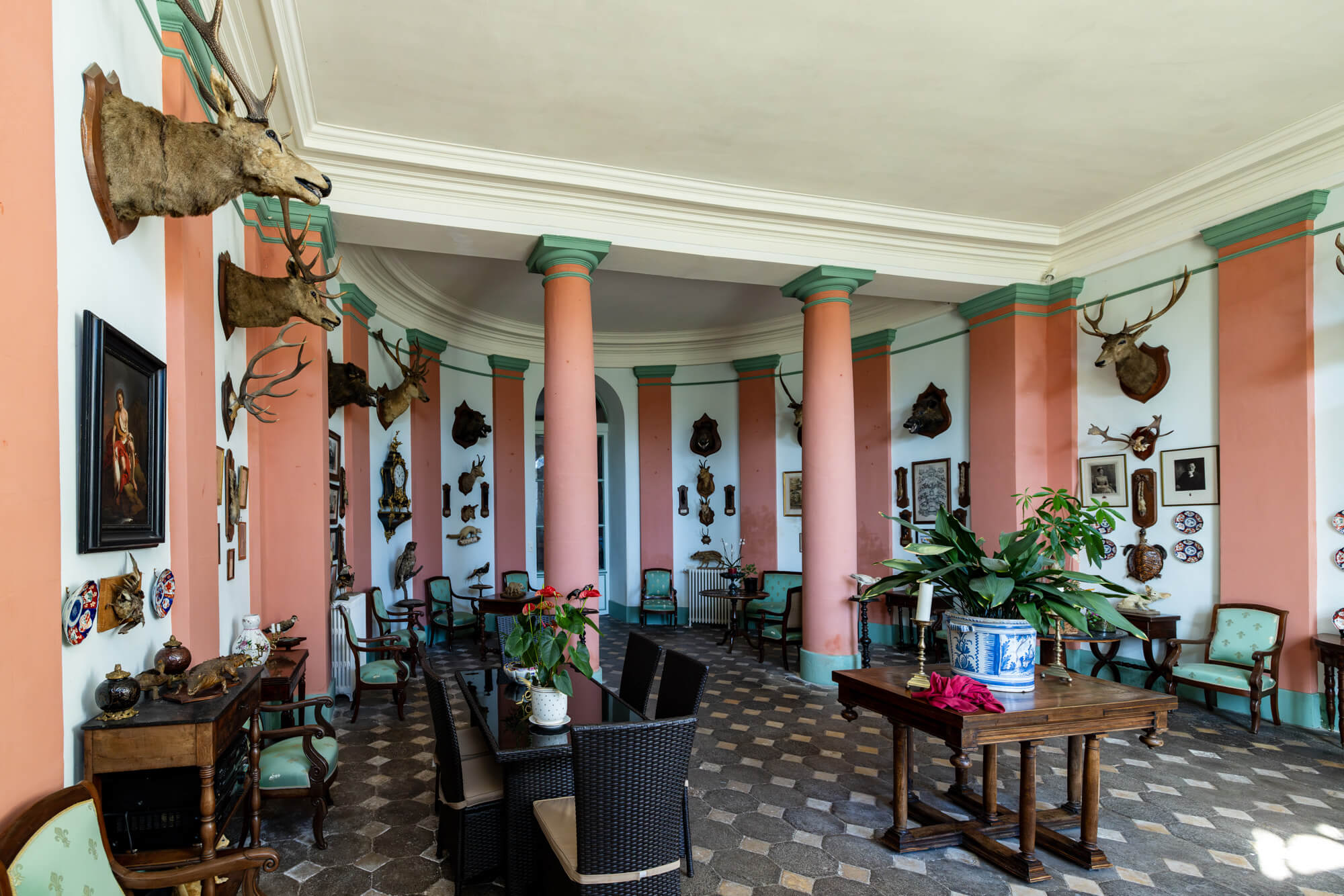
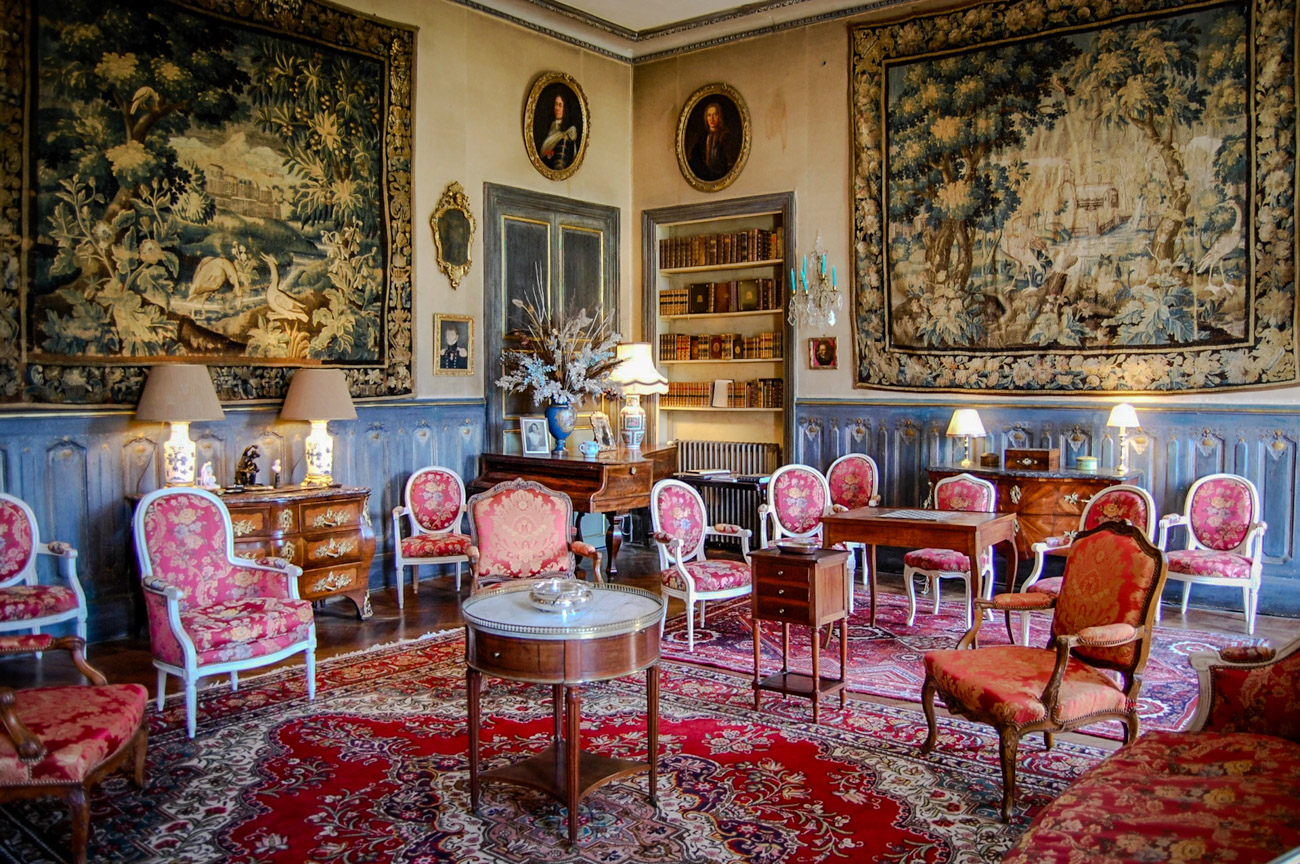
The château’s neoclassical décor, largely reworked at the turn of the Empire period, reflects a profound attachment to the canons of antique beauty, reinterpreted through the lens of French taste. Nothing here seeks spectacle; the decorative vocabulary remains measured, controlled, almost introspective. Mouldings grow finer, cornices more restrained, stuccowork ordered along rigorous axes. The late Louis XVI style converses with the early influences of the Empire, lending the spaces a noble elegance, stripped of excess. One senses the intention of an enlightened generation to reaffirm its standing, not through display, but through harmony. Marble is at times artfully painted in imitation, in keeping with 18th-century tradition; panelling recedes to allow surfaces to breathe. Natural light, enhanced by the disciplined arrangement of openings, underscores the sobriety of a décor of profound coherence. This is less a décor of power than one of balance, conceived for receiving, contemplating, and perhaps meditating.
An Articulation Orchestrated Around Symmetry and Movement
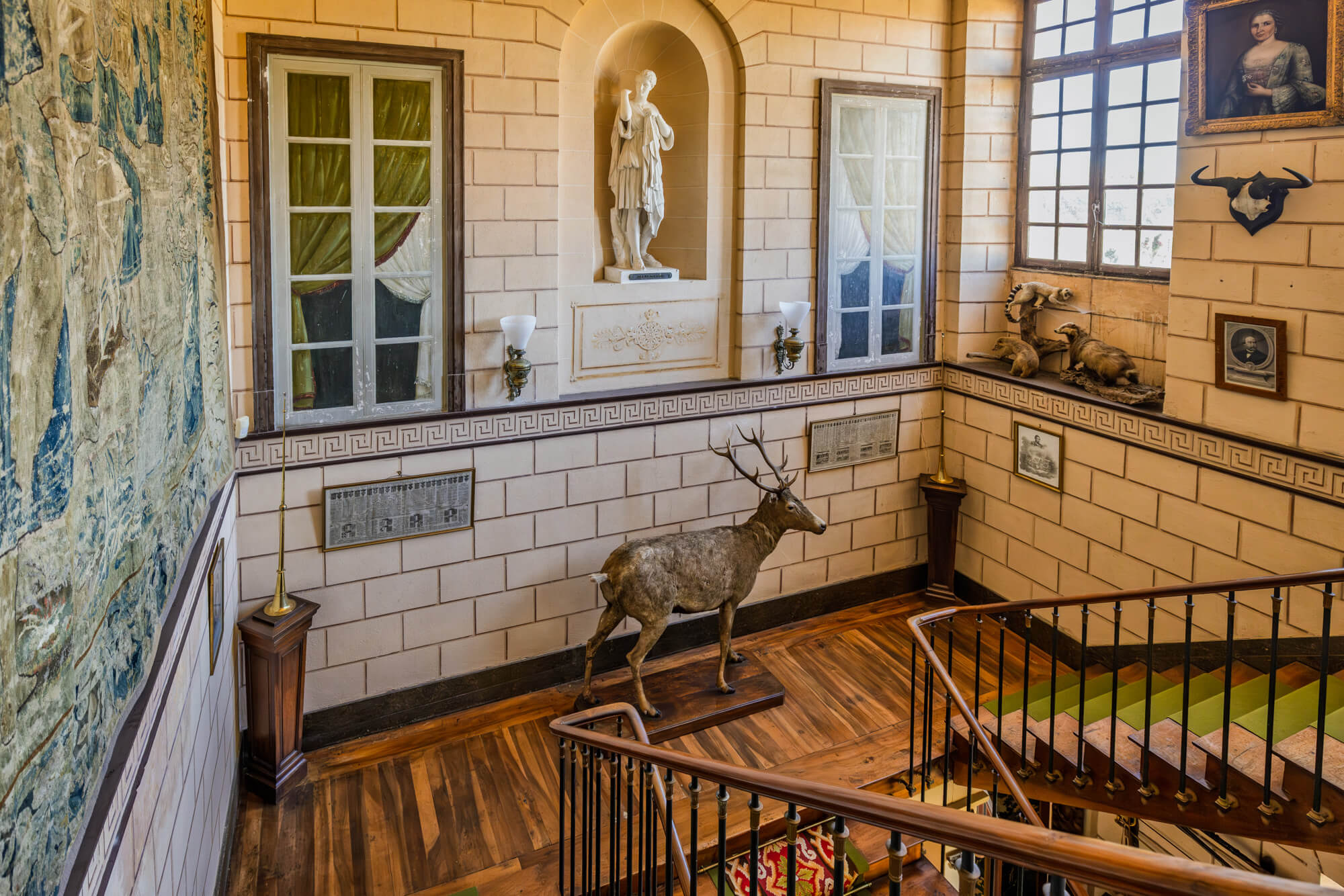
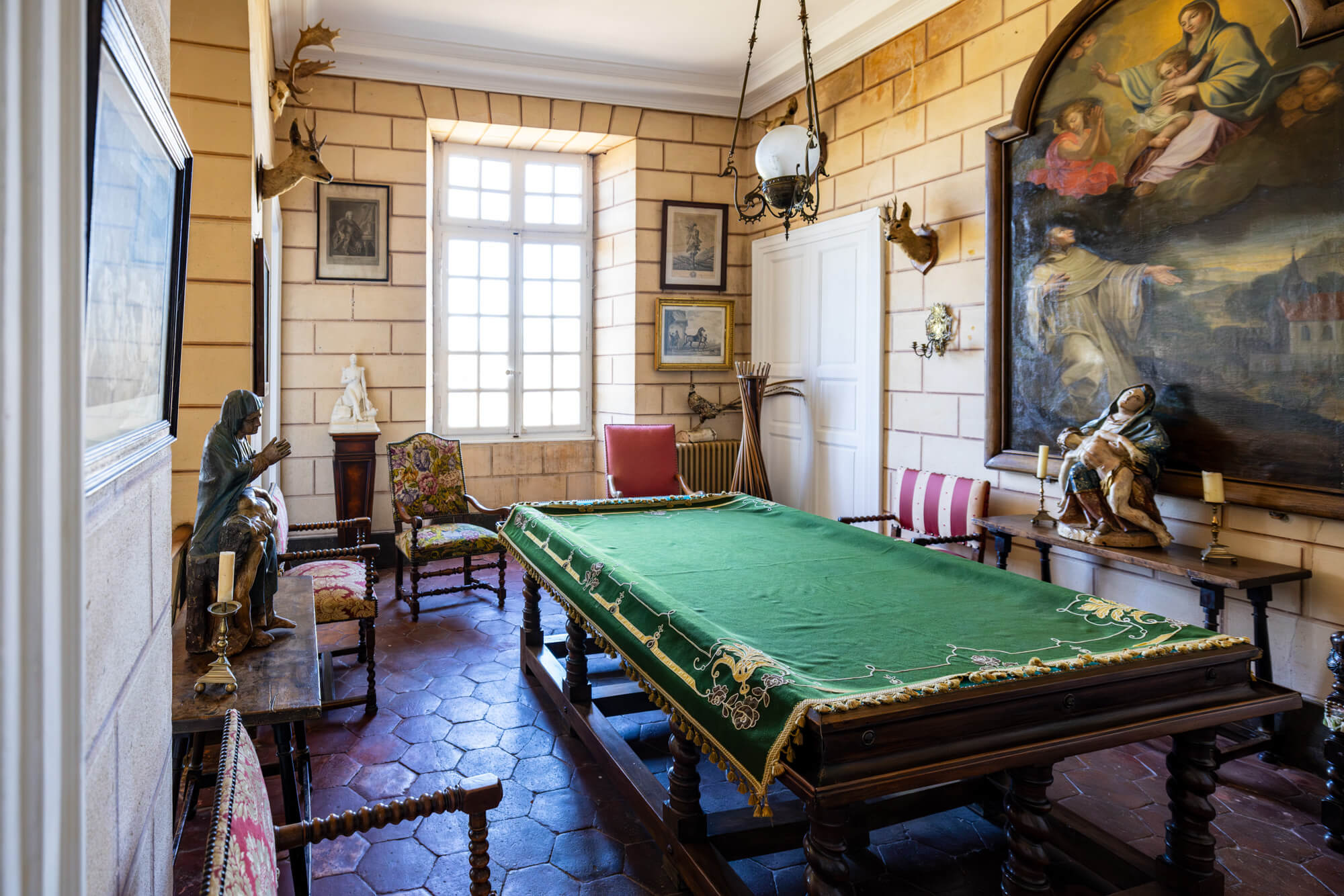
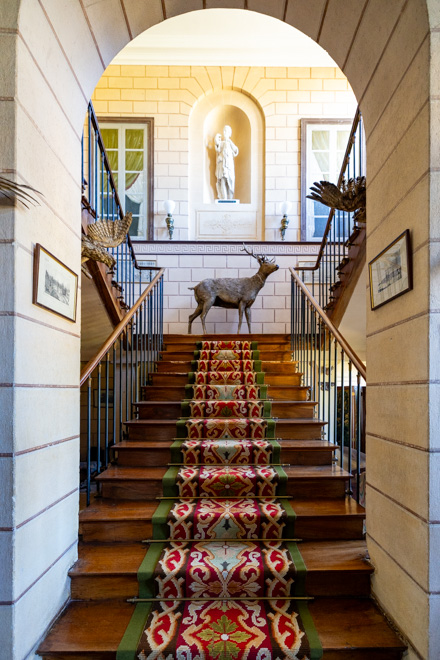
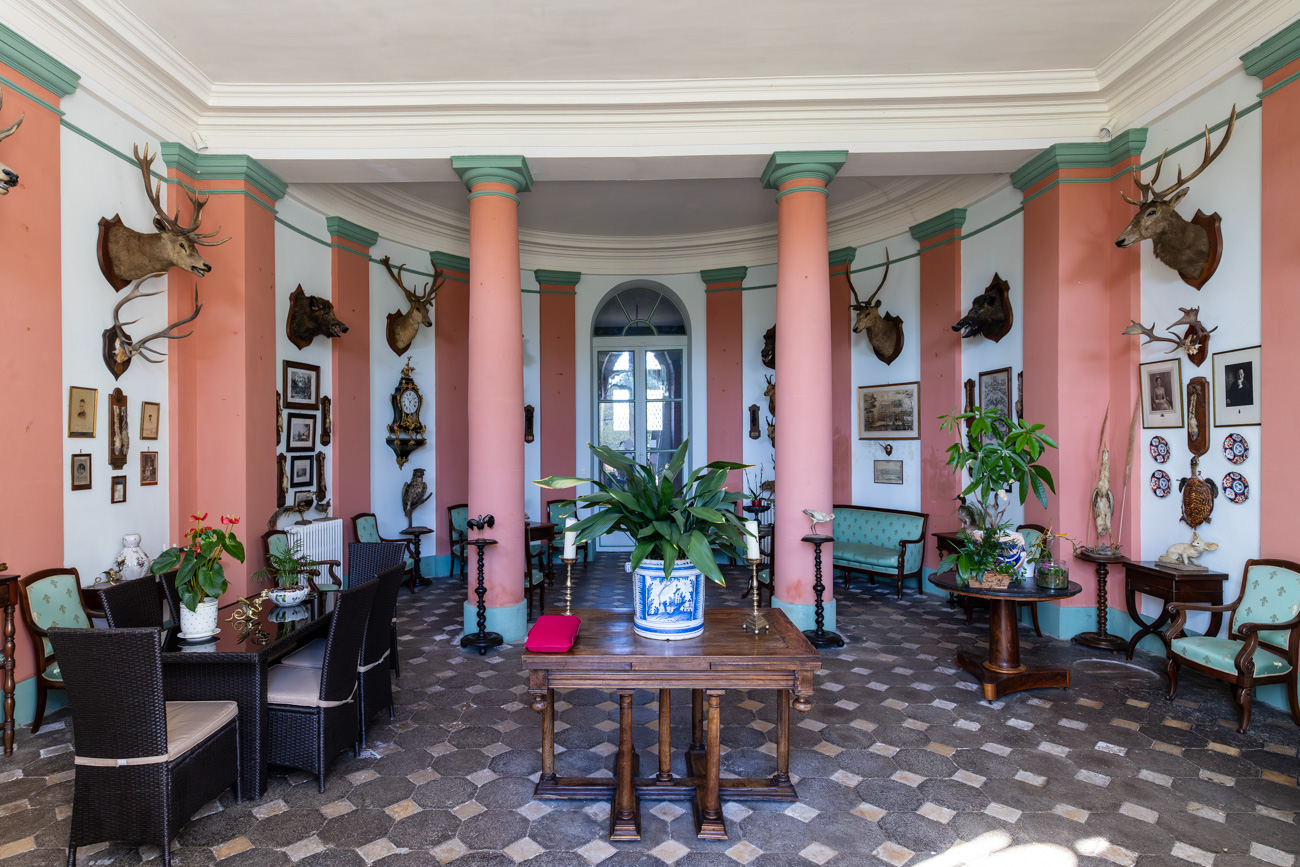
The vestibule, positioned at the centre of the north façade, opens onto a vast stair hall where a monumental staircase rises, serving both the lateral wings and the principal floor. Treated with solemnity, this space leads into the grand reception salon: the centrepiece of the ground floor, it opens through three large windows onto the park, in perfect axial alignment with the entrance. At its centre, two well-proportioned Tuscan columns articulate the space without dividing it, recalling antique halls while preserving the fluidity of a modern-era salon. Beyond lies the dining room, whose décor deserves particular mention: refined stuccowork, painted faux marbles, and subtle tonal harmonies form a pictorial composition whose execution bears a signature, a rare privilege attesting to the exceptional care devoted to the whole. Each room retains its formal autonomy, yet all obey a shared logic of progression and staging: light, volume, rhythm. What unfolds here is an interior architecture of gaze and movement, offered to those who know how to read its score.
The Art of Gardens
Outbuildings in Their Full Majesty
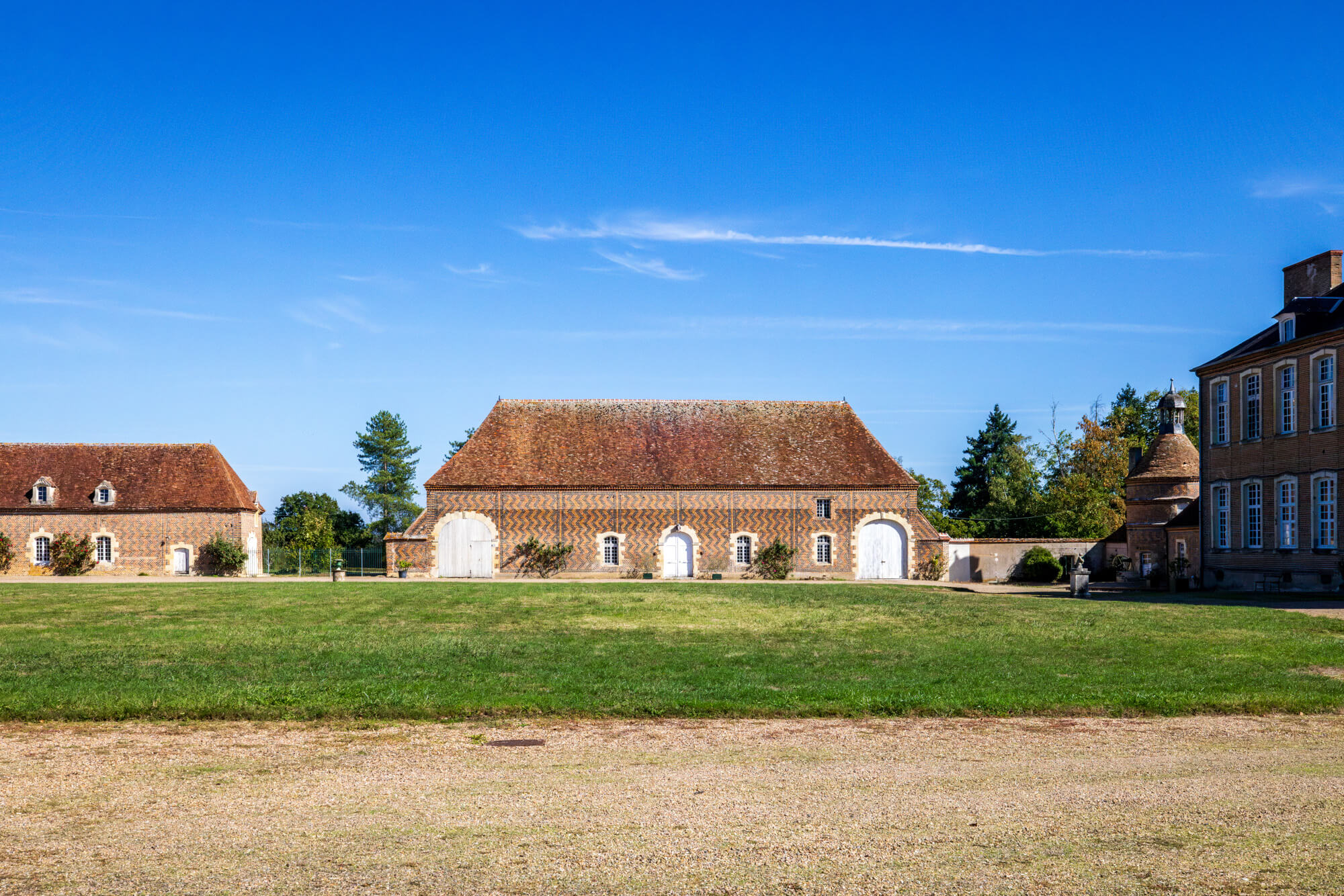
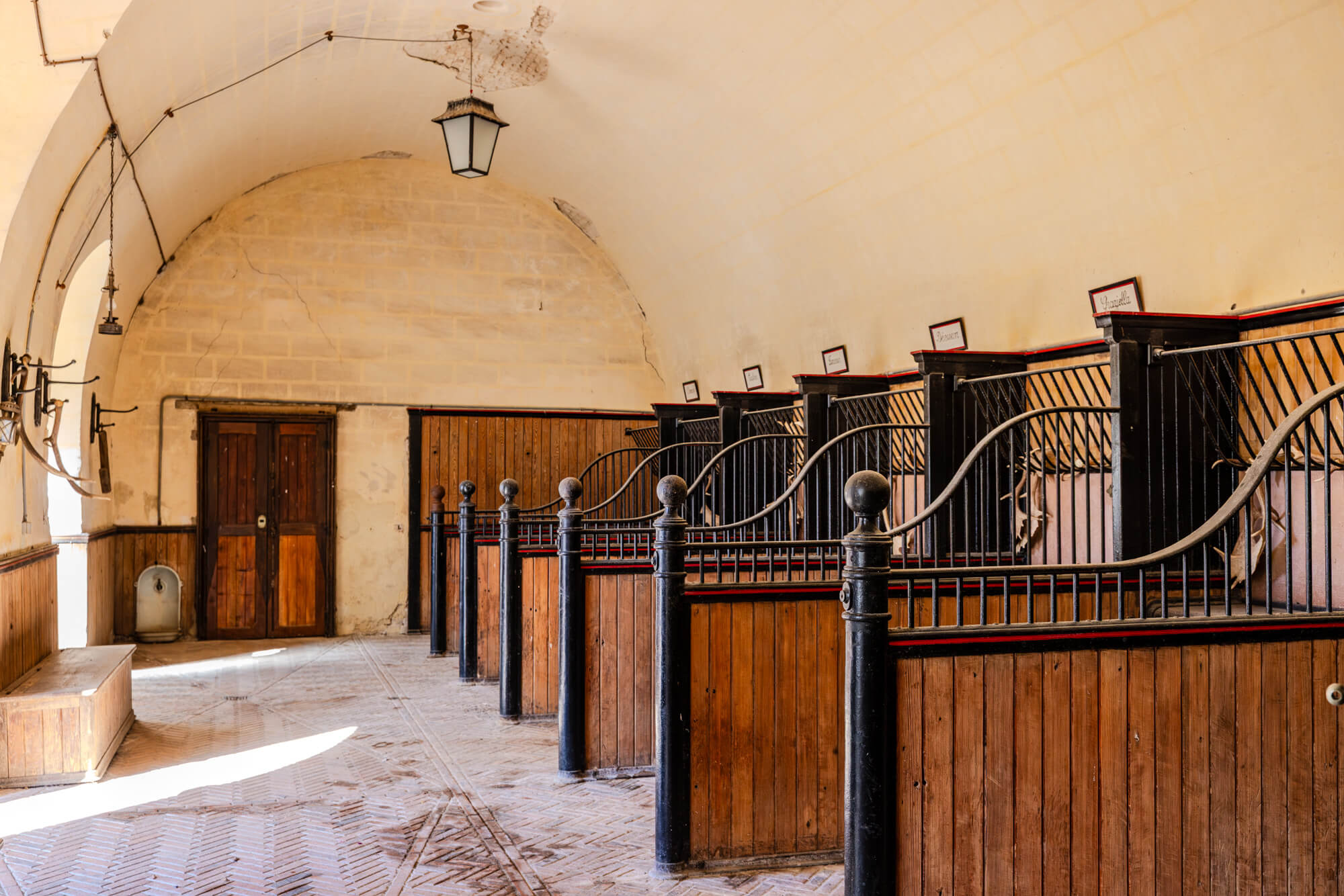
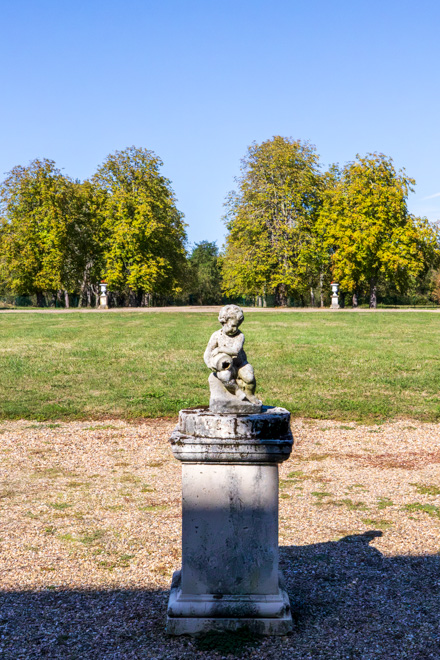
The château stands at the heart of a remarkable built ensemble, structured around a vast one-hectare cour d’honneur whose disciplined layout evokes the monumental compositions inherited from the Grand Siècle. Yet here, nothing is ostentatious: the architecture of the outbuildings echoes the lines of the château with delicacy, softened in a manner characteristic of the reign of Louis XV. It is a serene symmetry, serving utility as much as beauty. The buildings, admirably preserved, still recount the life of a complete estate: stables, staff quarters, a former reception hall, carriage houses, barns and agricultural outbuildings, all retain their original functions and historic attributes. An elegant imprint of the Second Empire can be discerned in certain rooflines, ironwork and fittings, like an echo of the grand hunts of former times, those occasions when gesture, bearing and attire composed a demanding art of living founded on measure and respect for place. This is not merely a setting, but a scenography of life, conceived to host, to organise, to protect. An estate in its fullness.
Between Line and Landscape
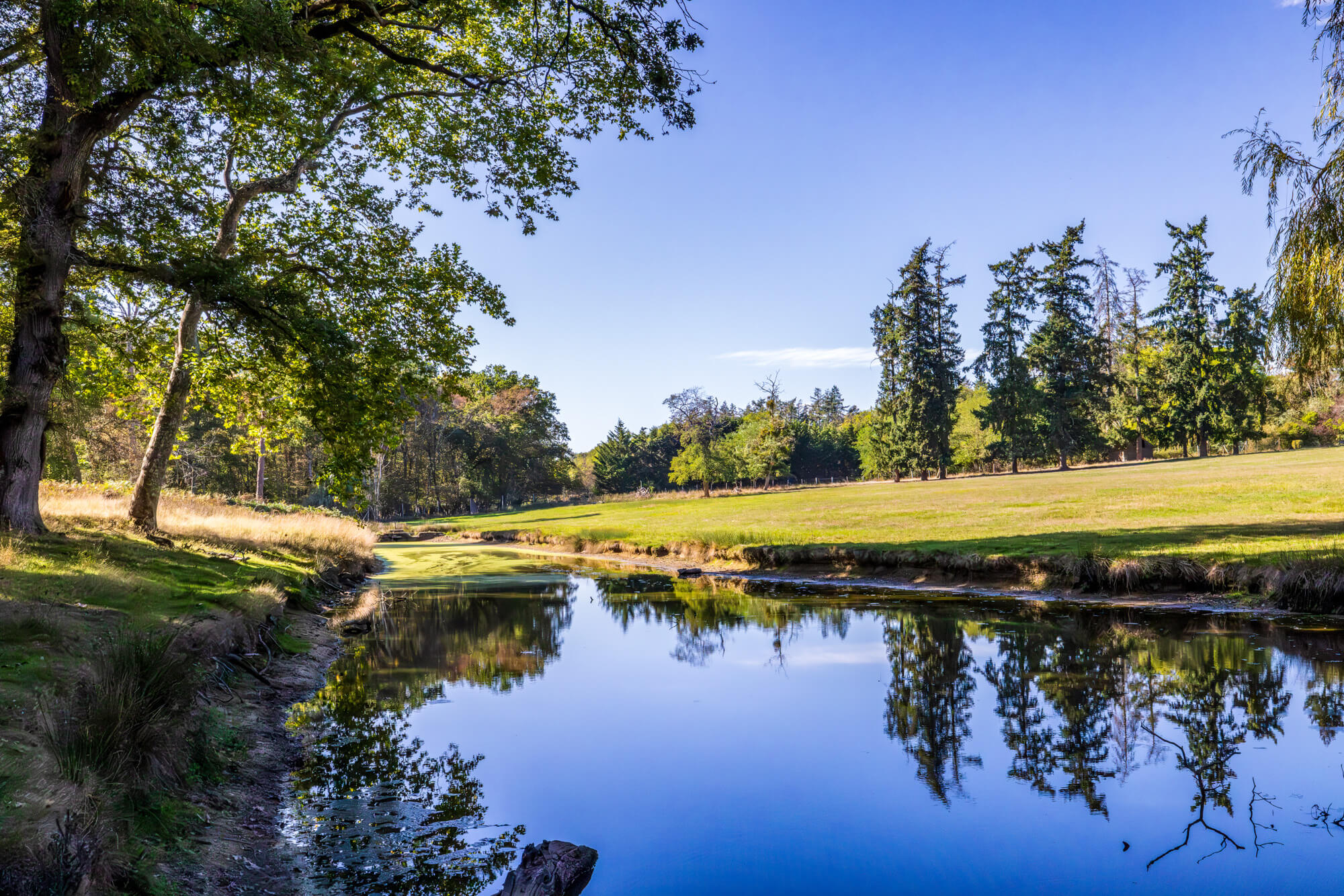
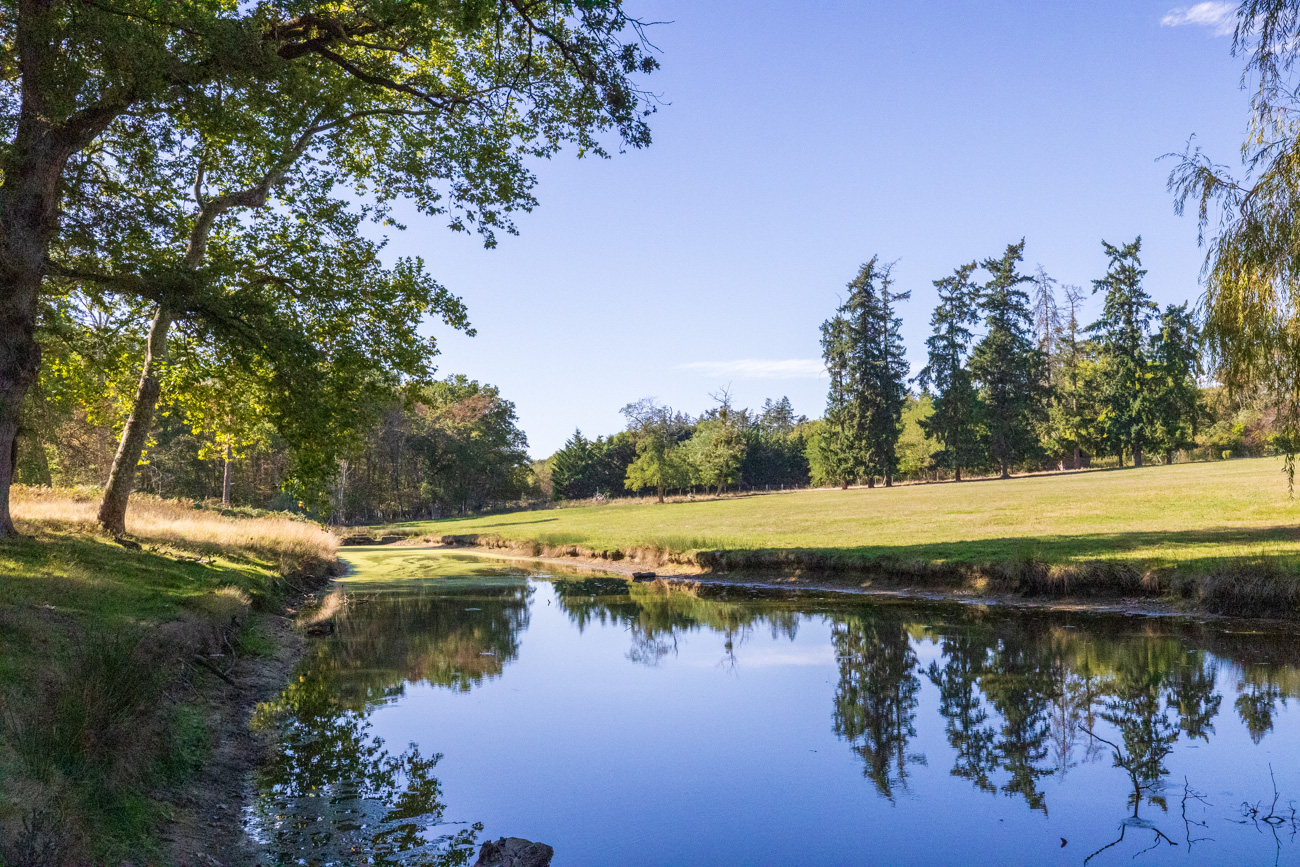
Of the former formal garden, only traces remain: subtle changes in level, faded alignments, glimpsed perspectives. Yet today, the eye finds its fullest expression in an English landscape park that quite literally enhances the architecture. To the south, the château opens onto a vast sweep of lawn bordered by clusters of rare trees and punctuated by a body of water, in a composition reminiscent of the country residences of British gentlemen. The landscape is no longer constrained; it is invited in. The horizon widens, vegetal masses punctuate the view without ever obstructing it. The walker discovers a gentle freedom, a continuous sense of breath and openness. Beyond, the fifteen-hectare park stretches toward the edges of an even larger woodland domain. The calm is absolute, broken only by the passing of the seasons, the whisper of the wind, the tread of a horse. A majestic avenue of chestnut trees discreetly recalls the former classical ordering, offering the estate a solemn yet verdant approach. Hunting, riding, entertaining, everything here invites the revival of an aristocratic art of living in constant dialogue with nature.

Essentials
•Department: Allier
• Construction: 17th–18th–19th centuries
• Living area: approx. 600 sqm
• Land area: approx. 15 hectares
• Number of rooms: 12
• Number of bedrooms: 6
• Outbuildings: Ancillary accommodation – Stables – Reception hall
• General condition: Good condition – Well maintained property
• Special feature: Listed Historic Monument
• Nearby: Shops and services 15 minutes away
• Energy Performance Certificate: Not required
• Net Seller Price: €1,750,000
• Agency Fees: €102,500 payable by the buyer
• Price Including Agency Fees: €1,852,500
Note on Historic Listing
The château benefits from partial listing as a Historic Monument, ensuring official recognition of its heritage significance. This status provides access to substantial tax advantages in the event of restoration works, as well as to specific grants, subject to project approval. It also stands as a guarantee of transmission, protection, and high standards, serving a living heritage.
Presentation brochure available upon request
Information regarding the potential risks to which this property is exposed is available on the Géorisques website: https://www.georisques.gouv.fr/
L&T's Insight
There are residences that do more than simply display beauty: they offer a setting for a certain way of inhabiting the world.
This estate is one of them. It brings together the elegance of measured architecture, the nobility of an inherited order, and the freedom of a park open to the surrounding landscape. Nothing here is overstated; everything is precise. Beauty does not impose itself, it unfolds quietly. One senses both the history and the hand, as well as the spirit of those who shaped it.
This is a place for those who enjoy hosting without ostentation, living in constant dialogue with nature without renouncing the art of decoration, and passing things on without freezing them in time. The grounds call for horses, for hunting, for long walks, but also for reading, for music, for silence.
This is not merely a property awaiting an owner; it awaits a presence. A sensitivity of gesture, a sense of balance, a vision. To those who share these values, you are invited to come and discover it.